
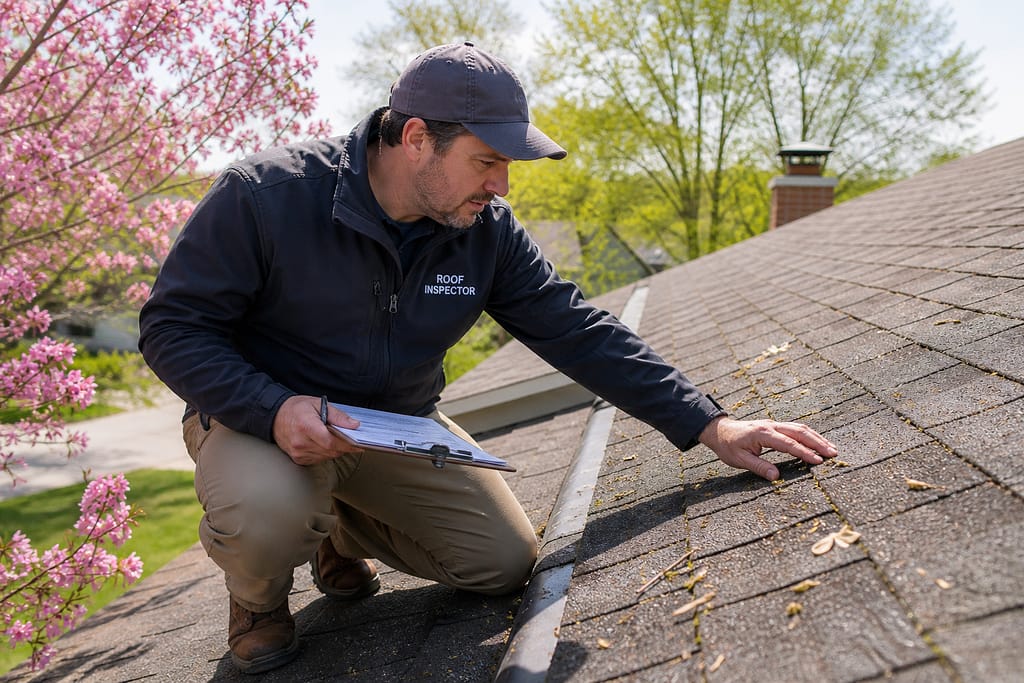
After months of ice, snow, and bitter winds, your roof has quietly taken a beating. Spring isn’t just a season for gardens and open windows — it’s your annual window of opportunity to find out exactly what winter left behind.
Most homeowners never think about their roof until water starts dripping through the ceiling. By then, a small, inexpensive repair has quietly become a large, disruptive one. A spring inspection breaks that cycle — and the timing couldn’t be more strategic.
Here’s why roofing professionals and savvy homeowners all agree: spring is the single best season to get up on — or have someone assess — your roof.
The Case for Spring
1. Winter Did the Damage — Now You Can See It
Ice dams, freeze-thaw cycles, heavy snow loads, and windblown debris are the four great enemies of any roof. They pry up shingles, crack flashing, loosen gutters, and compress insulation beneath the surface. Come spring, all of that damage is sitting right there, waiting to be found — before the first summer rainstorm drives water straight through it.
2. Repair Season Is Wide Open
Spring is the sweet spot between winter’s frozen impossibility and summer’s scorching demand. Roofing contractors are available, materials are in stock, and you’re not competing with every other homeowner who just watched a tree fall on their home during a July storm. Booking an inspection in April or May means you can schedule repairs on your schedule — not the contractor’s frantic one.
3. Catch Leaks Before the Rain Really Hits
Spring showers are the first real test of winter’s work. A hairline crack in your flashing or a few missing granules from a shingle might pass a dry winter undetected — then fail dramatically in April’s heavy rains. An inspection before the wet season means you’re patching vulnerabilities rather than chasing active leaks through wet insulation and damaged drywall.
4. Ideal Inspection Conditions
Roofing professionals need dry surfaces, moderate temperatures, and good visibility. Spring delivers all three. The snow is gone, the ice has melted, and the brutal summer heat that makes asphalt shingles dangerously pliable is still weeks away. Inspectors can walk safely, see clearly, and spot damage that ice and snow would have buried.
5. Protect Your Attic and Insulation
A roof isn’t just shingles — it’s a system. Ice dams and winter moisture often compromise the attic space beneath, soaking insulation and creating the warm, damp conditions that mold loves. Spring inspections that include an attic check can catch these hidden problems before mold becomes a health issue and insulation replacement becomes unavoidable.
6. Your Gutters Need Attention Too
Winter fills gutters with debris, ice, and granules shed from aging shingles. Clogged or damaged gutters push water back up under roofing material and away from your foundation. Spring is the natural time to clean them out, check for sags and separations, and ensure your entire drainage system is ready for the months ahead.
The best time to fix a roof is on a sunny day — not when it’s raining.
What Inspectors Look For in Spring
A thorough spring inspection isn’t just a quick glance from the driveway. A qualified inspector — or a careful, safety-conscious homeowner with binoculars — will examine the following:
🏠 Spring Roof Inspection Checklist
- Missing, cracked, curling, or blistered shingles
- Granule loss and bare spots on asphalt shingles
- Damaged or lifted flashing around chimneys, skylights, and vents
- Signs of ice dam damage along the eaves
- Clogged, sagging, or separated gutters and downspouts
- Soft spots or visible sagging in the roof deck
- Moss, lichen, or algae growth — signs of trapped moisture
- Interior signs: water stains on ceilings, damp insulation in attic
- Cracked or deteriorating caulk around penetrations
- Damaged or missing ridge caps
DIY vs. Professional Inspection
Homeowners can do a lot from the ground — and from inside the attic. Grab a pair of binoculars and slowly scan each plane of your roof from multiple angles. Look for obvious damage: lifted shingles, dark staining, or sections that look uneven.
For a thorough evaluation, however, a licensed roofing contractor brings trained eyes, safety equipment, and the experience to spot early-stage problems that look like nothing until they’re everything. Most inspection visits are low-cost or free, and the peace of mind is worth far more than the fee.
The rule of thumb: if your roof is more than ten years old, make annual professional inspections a non-negotiable. If it’s newer, a sharp DIY eye in spring combined with a professional check every two or three years is a solid strategy.
The Cost of Waiting
Here’s the uncomfortable math: a missing shingle costs $150 to fix. Water damage from a missing shingle, left unaddressed through a wet summer, can cost $3,000 to $10,000 — or more, if it reaches structural elements or triggers mold remediation. A spring inspection is the cheapest insurance policy you can buy for your home.
Beyond the dollars, consider the disruption. A small roof repair takes an afternoon. A significant water damage repair means weeks of contractors, displaced furniture, and the particular stress of watching your home be taken apart and put back together. Early detection isn’t just financially smart — it’s sanity-preserving.
A spring inspection is the cheapest insurance policy your home will ever have.
Make It an Annual Ritual
Think of a spring roof inspection the way you think of a physical exam or a car service — a regular, boring, enormously valuable habit. Add it to your spring-cleaning list alongside clearing out the garage and checking smoke detectors. Your roof, after all, is the one thing standing between your family and everything the sky can throw at it.
The seasons are cyclical, and so is the wear on your home. Winter takes. Spring reveals. Take advantage of the window — schedule your inspection, fix what needs fixing, and spend the rest of the season enjoying what your home was built for.
Don’t Wait Until the Ceiling Gets Wet
Schedule your spring roof inspection now — while contractors are available, weather is cooperative, and small problems are still small. Book an Inspection.