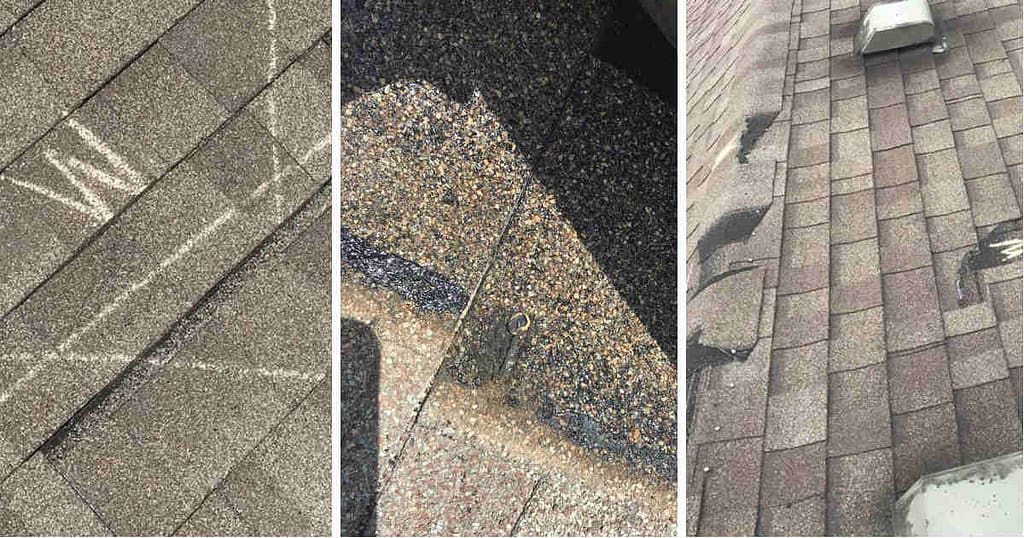
Before you pick a shingle, you need to understand the invisible force that will test your roof every single storm season.
When most homeowners think about choosing a roof, they think about color, cost, and curb appeal. What they rarely think about — until a major storm tears off a section of asphalt shingles — is wind rating. Wind rating is not a marketing term. It is a certified, tested measurement that determines exactly how much wind force a roofing product can withstand before it fails. Getting this number wrong can mean the difference between a roof that lasts 30 years and one that requires an emergency claim after the first serious storm.
Wind damage is the leading cause of homeowner insurance claims in the United States, and a significant portion of those claims involve roofing materials that were simply not rated for the conditions they faced. Understanding wind ratings — how they are determined, what the codes mean, and how they map to roofing materials — is one of the most practical things a homeowner can do before making a roofing investment.
What is a Wind Rating, Exactly?
A wind rating is a standardized measurement of the maximum wind speed, in miles per hour, that a roofing system can withstand without sustaining damage. These ratings are established through laboratory testing using protocols developed by organizations such as the American Society for Testing and Materials (ASTM), Underwriters Laboratories (UL), and the Florida Building Commission — the latter being particularly rigorous given the state’s hurricane exposure.
The key standard most homeowners will encounter is ASTM D3161, which covers asphalt shingles, and UL 2218, which governs impact resistance (important for hail, which often accompanies high winds). For wind specifically, UL 997 and UL 580 are frequently referenced for shingles and roof assemblies respectively.
A roof rated for 90 mph and a roof rated for 150 mph may look identical from the street — but in a Category 3 hurricane, only one of them stays on.
The rating applies to the entire system, not just the shingle. Fasteners, underlayment, deck attachment, ridge caps, and installation technique all contribute to how a roof performs under wind load. A premium shingle improperly installed will fail before a mid-grade shingle properly secured.
Understanding Building Code Wind Zones
The International Building Code (IBC) and International Residential Code (IRC) divide the United States into wind speed zones based on historical storm data. These are visualized in wind maps that specify the “design wind speed” — the speed a structure in that location must be engineered to withstand. The most recent editions use a three-second peak gust model, which is more demanding than the older fastest-mile model.
| Zone | Design Wind Speed | Typical Geography | Minimum Shingle Rating |
|---|---|---|---|
| I | Up to 90 mph | Interior continental U.S., low-risk plains regions | Class D (60 mph) |
| II | 90–110 mph | Gulf Coast interior, parts of the Southeast | Class F (90 mph) |
| III | 110–130 mph | Coastal zones, tornado alley, mountain passes | Class G (120 mph) |
| IV | 130–150+ mph | South Florida, coastal barrier islands, hurricane zones | Class H (150 mph) or metal |
It is critical to check your local jurisdiction’s specific adopted code, not just the national map. Many coastal counties and municipalities have adopted more stringent requirements than the base IBC. Miami-Dade County’s code, for example, is among the strictest in the country and has its own approval system (the Miami-Dade Notice of Acceptance, or NOA) that roofing products must pass independently.
Your local building department can tell you the design wind speed for your specific address. This is the single most important number to know before purchasing any roofing material. Ask for it before you ask for quotes.
How Wind Rating Shapes Material Selection
Once you know your local design wind speed, you can evaluate roofing materials with a much clearer framework. Here is how the most common residential roofing materials compare:
3-Tab Asphalt: Up to 60–70 mph
The entry-level option. Wind uplift is the primary failure mode — tabs peel from the leading edge first. Rarely appropriate for Zone II or higher without supplemental adhesive.
Architectural Shingle: 110–130 mph rated
The current standard for most U.S. residential roofing. Laminated construction resists uplift better than 3-tab. High-wind versions are available and should be specified in Zone III.
Impact-Resistant Shingle: 130+ mph rated
Engineered for severe weather markets. Combines high wind ratings with UL 2218 Class 4 impact resistance. Often qualifies for insurance discounts in hail- and wind-prone areas.
Clay / Concrete Tile: 125–150 mph (system-dependent)
Mass provides natural resistance, but the attachment system is everything. Improperly battened tile fails catastrophically in high winds. System-tested ratings are essential.
Standing Seam Metal: 140–180+ mph
The benchmark for wind performance. Concealed fastener systems eliminate the primary failure point of exposed-fastener products. Appropriate and often required in Zone IV environments.
Wood Shake: 60–90 mph
Aesthetically distinctive but among the lowest wind performers. Individual shakes are vulnerable to uplift, and the open-deck installation common with shake reduces system resistance.
Installation: Where Ratings Live or Die
No discussion of wind ratings is complete without addressing installation. A shingle manufacturer may certify their product to 130 mph under ASTM D7158, but that rating is only valid when the shingle is installed per the manufacturer’s high-wind instructions — which typically include a greater number of fasteners per shingle, reduced exposure length, and sealed starter strips along all eaves and rakes.
The most common installation failures that void wind ratings include:
- Insufficient nailing — four nails per shingle when six are required for the wind zone
- Nails driven above the manufacturer’s nailing zone (the “nail line”)
- Missing or improperly applied starter course at eaves and rakes
- Inadequate sealing of ridge caps and hip shingles
- Deck fastening that does not meet code for wind uplift resistance
- Improper flashing at penetrations, allowing wind-driven rain intrusion after wind event
At Roof Ohio, we are familiar with the high-wind installation requirements for the product being installed, and ensure everything is done properly to ensure you have the best roof possible. No cutting corners.
The roof that fails in a storm is usually not a material failure. It is an installation failure masquerading as one.
Insurance, Warranties, and the Financial Case
Wind ratings have a direct financial dimension beyond the cost of the roof itself. In many states — particularly Florida, Texas, Louisiana, and the Carolinas — homeowner’s insurance carriers offer meaningful discounts for roofs that meet specific wind mitigation criteria. In Florida, a formal Wind Mitigation Inspection can document your roof’s deck attachment, roof covering type, and roof-to-wall connections, and the resulting discount can be substantial — sometimes exceeding the premium cost difference between a standard and impact-resistant product over the policy term.
Manufacturer warranties are also conditioned on wind rating compliance. Most architectural shingle warranties that we have carry a standard wind warranty of 110–130 mph.
The Bottom Line
Selecting a roof without understanding wind ratings is like buying tires without knowing the speed rating — the product may look right and function adequately under normal conditions, but when conditions push into the margins, the gap between a correctly specified product and an underspec’d one becomes very real, very fast.
The process does not need to be complicated. Know your local design wind speed. Match your material to that wind zone. Verify that your contractor understands and will follow the high-wind installation requirements for the product they are installing. And read both the warranty and the inspection report carefully before the first storm season.
A roof is the most consequential weather barrier your home has. Wind rating is the language in which that barrier speaks. Contact us today to discuss your wind-resistant shingle options.