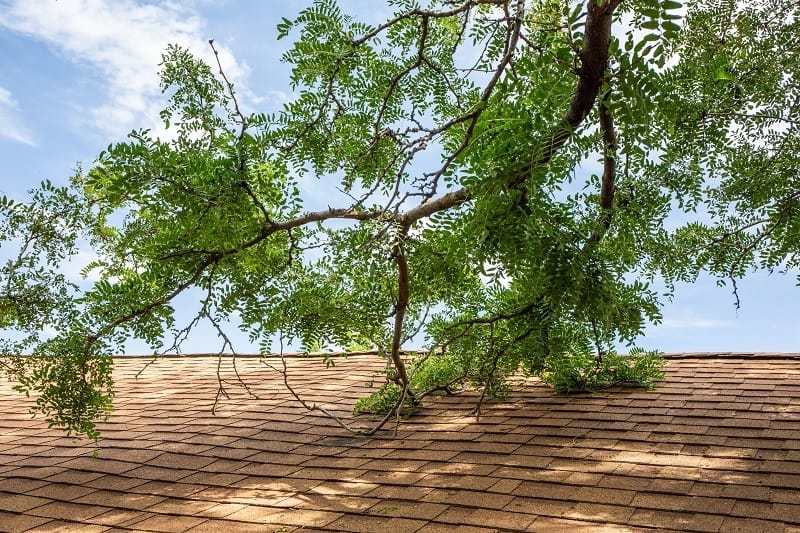
Most homeowners think about their roof only when something goes wrong — a leak, a missing shingle, an insurance claim. But one of the simplest, most overlooked ways to add years to your roof’s life has nothing to do with roofing materials at all. It’s the tree in your backyard.
If you have branches hanging over or near your home, you’re quietly setting your roof up for a shorter lifespan. Here’s why trimming them back is one of the best investments you can make in your home.
Leaves and Debris Are Slowly Rotting Your Roof
It seems harmless enough — a few leaves collecting in your gutters, some twigs landing on the shingles. But over time, organic debris becomes a serious problem.
When leaves pile up on your roof, they trap moisture against the surface. That sustained dampness is the enemy of asphalt shingles, wood shakes, and even metal roofing. It accelerates the breakdown of shingle granules, promotes the growth of moss, lichen, and algae, and creates the wet conditions that lead to rot in the decking underneath.
Trimming branches back reduces how much debris falls onto your roof in the first place — which means fewer opportunities for moisture to get a foothold.
Overhanging Branches Are a Storm Risk You Can See Coming
A major windstorm or ice event can turn an overhanging limb into a battering ram. Branches that scrape against your roof during ordinary wind also cause slow, cumulative damage — grinding away shingle granules and wearing down the protective layer that keeps water out.
A heavy branch that comes down in a storm can punch through your roof deck entirely, requiring not just shingle replacement but structural repair. That’s a repair bill that can easily reach thousands of dollars — most of which could have been prevented with an afternoon of pruning.
The general rule: keep branches at least 10 feet away from your roofline. That buffer gives branches room to sway in wind without making contact with your home.
Shade from Trees Encourages Moss and Algae Growth
Trees provide beautiful shade — but on your roof, shade is a problem. Roofing materials need sunlight and airflow to dry out after rain. When overhanging branches keep sections of your roof in shadow for most of the day, moisture lingers far longer than it should.
That’s exactly the environment where moss and algae thrive. Moss, in particular, is destructive: its root-like structures work their way under shingles and lift them, allowing water to seep underneath. Algae creates dark streaks that absorb heat and degrade shingles faster. Both signal a roof that’s staying wet when it should be drying out.
Thinning branches overhead — even when they don’t directly overhang the roof — dramatically improves airflow and sunlight exposure, which goes a long way toward keeping moss and algae at bay.
Gutters Clogged with Tree Debris Back Up Against Your Fascia
Your gutters exist to channel water away from your roof and foundation. But when they’re packed with leaves, pine needles, and seed pods, they can’t do their job. Water backs up, sits against the fascia boards, and eventually seeps under the drip edge and into the roof structure.
Ice dams in winter are made far worse by clogged gutters — water that can’t drain freely freezes and forces its way under shingles. This is one of the leading causes of interior water damage in cold climates.
Trimming trees back doesn’t eliminate gutter cleaning, but it dramatically reduces how often debris accumulates — and how severe the consequences are when it does.
When to Trim and When to Call an Arborist
Not every tree trimming job is a DIY project. Branches close to your roofline, large limbs, or trees growing near power lines are jobs for a certified arborist. The cost of professional tree trimming is a fraction of what you’ll pay for a premature roof replacement.
As a general guide:
- Trim annually — ideally in late fall or early spring, before storm season
- Remove any branches within 10 feet of the roof surface
- Look for dead or cracked limbs that could come down unexpectedly
- Thin dense canopy that casts prolonged shade over the roof
- Check after major storms for new hazards you didn’t have before
The Bottom Line
A well-maintained roof can last 25 to 50 years, depending on the material. A poorly maintained one — kept damp, shaded, and pelted by branches — might not make it half that long. Tree trimming is one of those unglamorous maintenance tasks that pays quiet dividends for years.
If you can’t remember the last time you looked up at your roof and thought about what’s hanging over it, now is a good time to take a walk around your yard. What you see might be worth taking seriously.