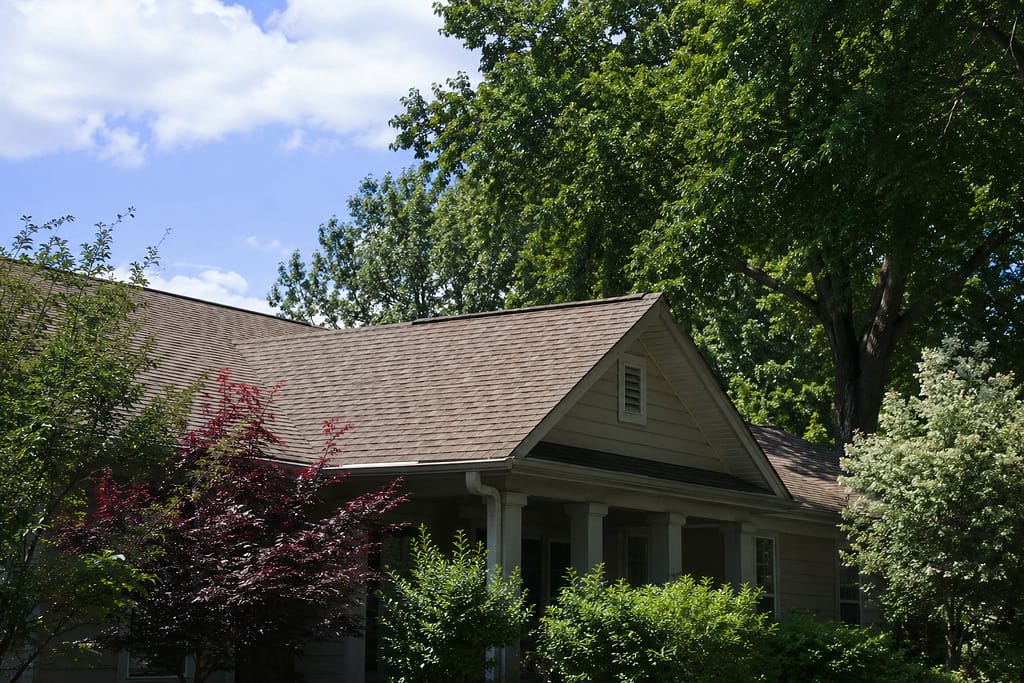
Trees and roofs have a complicated relationship. Done right, the trees on your property can shade your home, cut your summer cooling costs, and boost your curb appeal. Done wrong, they can drop limbs on your shingles, clog your gutters every fall, and send root systems creeping toward your foundation.
At Roof Ohio, we’ve inspected more storm-damaged roofs than we can count, and a surprising number of those claims start with a tree that was planted a little too close, a little too tall, or a little too messy for its spot. Whether you’re landscaping a new build in New Albany or filling in a bare yard in Pickerington, here’s what to plant, what to avoid, and how far away to keep it.
Why Tree Choice Matters More Than You Think
Central Ohio gets the full range of what nature can throw at a roof — ice storms, summer thunderstorms rolling in off the plains, the occasional derecho, and enough freeze-thaw cycles to stress any structure over time. A tree that’s poorly matched to its location becomes a liability the moment a storm rolls through.
The three things we look for when we assess a tree’s risk to a roof are:
- Mature height and canopy spread — will it eventually tower over the house or spread wide enough to overhang it?
- Branch strength and growth habit — does the species tend to drop limbs, or is it known for weak branch unions?
- Debris type — does it shed sap, seed pods, or heavy fruit that pile up on shingles and clog gutters?
Get those three right, and a tree becomes an asset. Get them wrong, and you’re looking at more frequent gutter cleanings, granule loss from abrasion, and a higher chance of impact damage in a bad storm.
Roof-Friendly Trees for Central Ohio Yards
These species tend to stay a manageable size, have sturdy branch structures, and don’t create excessive roof or gutter debris — all good options for planting within reasonable distance of a house.
Eastern Redbud — A Central Ohio native that stays relatively small (20–30 feet), with a graceful, rounded form. Spring blooms are gorgeous and it doesn’t drop the kind of heavy debris that clogs gutters.
Serviceberry — Another native option, typically topping out around 25 feet. Multi-stem varieties look great near a front porch and produce light, manageable leaf litter.
Japanese Maple — Ornamental, slow-growing, and rarely exceeds 15–20 feet. A great choice for planting close to the house for shade or accent without worrying about it outgrowing its spot.
Dogwood — Stays compact, handles Ohio’s clay soil reasonably well, and its branch structure is far less prone to storm breakage than faster-growing species.
Crabapple — Popular across Dublin and Powell neighborhoods for good reason — manageable size, strong wood, and while it does drop fruit, it’s minor compared to species like sweetgum or black walnut.
Trees to Think Twice About Near Your Roof
Silver Maple — Fast-growing and common in older Central Ohio neighborhoods, but it’s notorious for weak wood and brittle branches that come down in wind and ice storms. If you’ve got a mature silver maple overhanging your roofline, it’s worth having it assessed.
Bradford Pear — Once planted everywhere in Ohio subdivisions, Bradford pears have a well-earned reputation for splitting apart under their own weight, especially once they hit 15–20 years old. Many municipalities have stopped recommending them for exactly this reason.
Cottonwood — Grows fast and tall, but with soft wood that doesn’t hold up well in storms, plus a serious mess factor from seed fluff.
Black Walnut — Drops heavy nuts capable of denting shingles and damaging gutters, and its root system isn’t friendly to nearby structures or other plants.
Willow — Beautiful near a pond, but aggressive roots and weak branch structure make it a poor match for anywhere close to a house or septic system.
How Far Should Trees Be From Your Roof?
As a general rule, we recommend keeping the trunk of a mature tree at least 15–20 feet from your roofline, and further for larger species like oaks or maples. Overhanging branches should be trimmed back so they’re not brushing shingles — even light, repeated contact can wear away granules over time and create a highway for squirrels and other pests looking for an attic entry point.
If you’ve already got mature trees close to the house, you don’t necessarily need to remove them. Regular trimming to keep branches clear of the roofline, combined with gutter guards to manage leaf and debris load, goes a long way.
When Existing Trees Become a Roof Problem
A few signs it’s time to call in a tree service, a roofer, or both:
- Branches within 6–10 feet of your roof surface
- Visible dead limbs anywhere in the canopy above the house
- Gutters that need clearing more than twice a year
- Moss or algae streaking on shaded sections of roof near heavy canopy cover
- Granules collecting in gutters near overhanging branches
If you’re not sure whether a tree near your home is a risk, a roof inspection is a good place to start — we’ll tell you honestly whether it’s a landscaping issue or a roofing issue (and sometimes it’s both).
Get an Honest Assessment
Whether storm damage from a fallen limb brought you here or you’re just planning ahead before planting, Roof Ohio offers free roof inspections across Westerville, Dublin, Powell, Hilliard, Gahanna, New Albany, Granville, Pickerington, Grove City, Canal Winchester, and the rest of the Central Ohio area. We’ll walk your roof, check for existing tree-related wear, and give you a straight answer — no pressure, no upsell.