
If you’ve lived in Westerville, Dublin, Powell, or anywhere else in Central Ohio for more than a summer or two, you know how this works. We get stretches of brutal, sticky heat — then a few merciful days where the humidity drops, the sun isn’t quite so punishing, and it actually feels good to be outside again.
Those cooler stretches are more than a relief. They’re an opportunity. A string of 90-degree days puts real stress on your home — your roof, your siding, your attic, your gutters — and the first comfortable afternoon afterward is the perfect time to get outside and see how everything held up. A quick walk-around now can catch small problems while they’re still small, before the next heat wave (or the next round of Ohio storms) makes them worse.
Here’s what we tell our own customers to look for.
1. Check your shingles for heat stress
Asphalt shingles are tough, but extreme heat softens the asphalt and can accelerate granule loss — those little sand-like granules that protect the shingle from UV damage. After a heat stretch, look for:
- Granules collecting in gutters or at the base of downspouts
- Shingles that look curled, cupped, or blistered
- Any spots that look noticeably darker or shinier than the rest of the roof (a sign the protective granule layer has worn thin)
None of this means you need a new roof tomorrow. But it’s good information to have, especially if your roof is 12-15+ years old.
2. Look at your attic ventilation
Heat doesn’t just bake the outside of your roof — it builds up underneath it. A poorly ventilated attic can hit temperatures well over 150°F on a hot afternoon, which cooks your shingles from below and drives up cooling costs at the same time.
On your next trip into the attic, check that:
- Soffit vents aren’t blocked by insulation
- Ridge vents or roof vents are clear of debris
- There’s no musty smell or visible moisture staining on the underside of the roof deck
If your attic feels like an oven even on a mild day, that’s worth a closer look.
3. Inspect your gutters and downspouts
Heat and dry spells often mean less rain, which means gutters get overlooked. But they’re doing important work in the background:
- Clear out any granules, leaves, or debris that built up
- Make sure downspouts are directing water at least 4-6 feet away from your foundation
- Check for sagging sections or pulled-away brackets — heat expansion and contraction can loosen fasteners over time
This matters even more once our Ohio storm season ramps back up.
4. Check siding for warping or gaps
Vinyl and other siding materials expand and contract with temperature swings. After a heat wave, walk your home’s exterior and look for:
- Warped, buckled, or melted-looking panels (this can happen if reflective light from a nearby window hits the siding)
- Gaps opening up at seams or corners
- Caulking around windows and trim that’s cracked or pulled away
Fiber cement and other materials handle heat differently, so if you’re not sure what you’re looking at, it’s fine to just take a few photos and ask someone.
5. Look for foundation and driveway cracking
Extended dry heat pulls moisture out of the soil around your home, which can cause the ground to shift slightly. Keep an eye out for:
- New cracks in your driveway or walkways
- Small gaps forming between your foundation and the soil line
- Doors or windows that suddenly stick or don’t close quite right
Most of this is cosmetic, but it’s worth tracking over time.
6. Check outdoor AC and exhaust vents
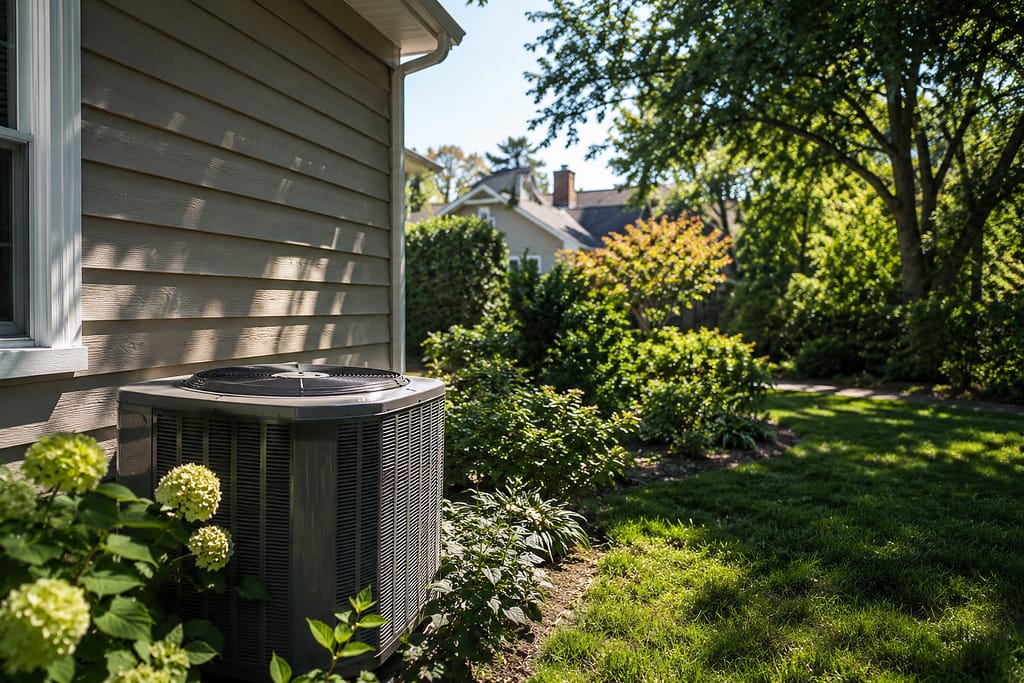
Not roofing-related, but worth a mention while you’re out there anyway: make sure your outdoor AC condenser has clear airflow (no overgrown landscaping crowding it) and that dryer and bathroom exhaust vents on your roof or siding aren’t blocked or damaged.
7. Take a few photos
Whatever you find — or don’t find — snap a few photos of your roof, gutters, and siding while the weather’s nice enough to be outside. It gives you a record to compare against later in the season, and it’s genuinely helpful if you ever need to document storm damage for an insurance claim down the road.
When it’s worth a second set of eyes
A lot of heat-related wear is minor and can just be noted and monitored. But if you’re seeing granule loss piling up, curling shingles, or soft spots when you press on the roof deck from the attic, it’s worth having someone take a look before the next big storm rolls through Central Ohio.
That’s what we’re here for. Roof Ohio has been helping homeowners across Westerville, Dublin, Powell, Hilliard, Gahanna, New Albany, Pickerington, Grove City, and Canal Winchester get ahead of small problems before they turn into expensive ones — no pressure, no upselling, just an honest look at what’s actually going on up there.