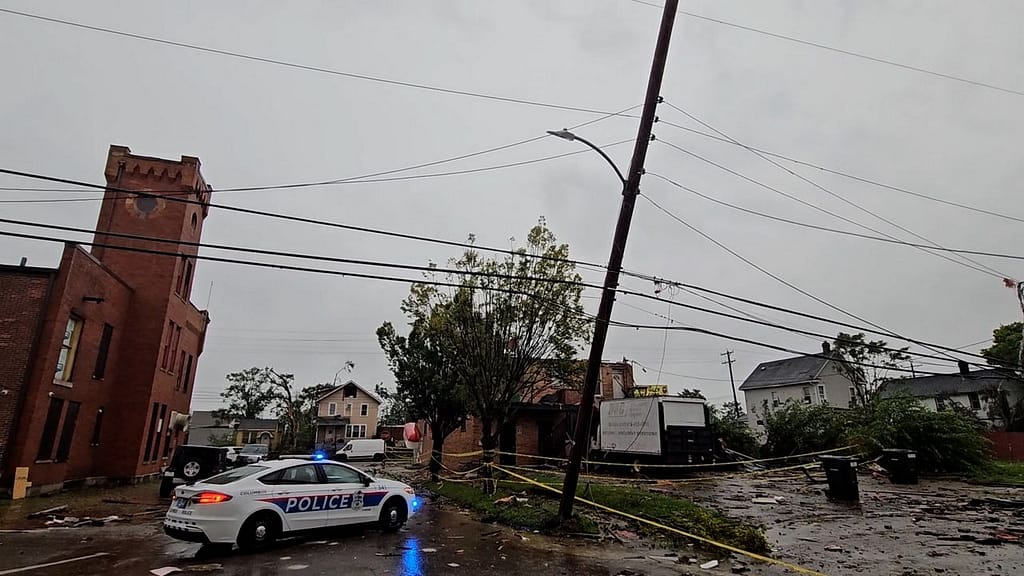
If you live anywhere in the Columbus area, you didn’t need a meteorologist to tell you Tuesday was bad. The National Weather Service has preliminarily confirmed that the storm system that tore through Central Ohio on August 11th was a derecho: a rare, long-lived windstorm that behaves less like a typical thunderstorm and more like an inland hurricane. Wind gusts topped 82 mph in Columbus, an EF-1 tornado was confirmed on the city’s south side, and at the height of the storm more than 200,000 Central Ohio households lost power. Governor DeWine has since amended the state of emergency declaration to include Franklin County.
If your roof, siding, or gutters took a hit, you’re not alone. And you’re not without options. Here’s what we want every homeowner in our community to understand right now.
This Wasn’t a “Normal” Storm
Derechos are uncommon enough that most homeowners have never dealt with the aftermath of one. Unlike a tornado, which carves a narrow, obvious path of destruction, a derecho pushes damaging straight-line winds across a wide, sustained corridor. Which is why so many neighborhoods across Central Ohio, not just one street or subdivision, are dealing with damage at the same time. That widespread nature is exactly why you’re already seeing an influx of roofing companies with out-of-state license plates going door to door this week.
We get it, after a storm like this, everyone wants their roof fixed yesterday. But a storm of this size is also when Central Ohio homeowners are most vulnerable to storm chasers: crews who show up for a few weeks, sign homeowners to contracts on the spot, do rushed or subpar work, and are gone long before a leak shows up next spring. If a company can’t point to a physical address in Central Ohio or a track record of jobs in your neighborhood, that’s worth asking about before you sign anything.
Start With an Inspection, Not a Sales Pitch
Wind damage isn’t always visible from the ground. Missing shingles are obvious. Lifted or creased shingles, damaged flashing, and granule loss from wind-driven debris often aren’t, but they can lead to leaks weeks or months down the road if left unaddressed. Before you agree to any repair or replacement, get a proper inspection from a local, licensed roofer who will document the damage with photos, not just give you a verbal estimate and a contract to sign.
A legitimate inspection should tell you plainly whether you have damage that warrants an insurance claim, or whether your roof came through fine. We’d rather tell a homeowner “you’re in good shape” than manufacture a job that doesn’t need to happen.
Emergency Tarping: Don’t Wait
If you have active leaking, exposed decking, or a section of roof that’s missing shingles entirely, get it tarped before the next round of rain. Central Ohio is still under flood watches this week, and an uncovered roof can turn a manageable repair into a full interior remediation project: drywall, insulation, flooring — in a matter of days. Emergency tarping is a stopgap, not a fix, but it buys you time to go through the insurance and repair process the right way instead of the rushed way.
Know Ohio’s Insurance Matching Law
If your roof, siding, or gutters are damaged badly enough to require a partial replacement, Ohio homeowners have a legal protection many people don’t know about: Ohio Administrative Code 3901-1-54, sometimes called the insurance matching law. In simple terms, if your insurer can’t reasonably match new materials to your existing undamaged materials (say, replacing 10 damaged squares of shingles on one slope but not the rest of the roof,) the law generally requires the insurer to address the mismatch, which can mean a full replacement rather than a patchwork repair. This matters a lot after a storm like Tuesday’s, where damage is often concentrated on one side of a roof depending on wind direction.
This is exactly the kind of detail a good local contractor will walk through with you and, if needed, help you raise with your adjuster.
ACV vs. RCV: Read Your Policy Before You Get a Check
Most homeowners policies pay out claims one of two ways: Actual Cash Value (ACV), which factors in depreciation on your existing roof, or Replacement Cost Value (RCV), which covers the full cost to replace it. Some policies pay ACV first and release the depreciated “recoverable” amount only after the work is completed and documented. If you don’t know which type of policy you have, find out before you start negotiating with your adjuster. It changes what a fair settlement actually looks like.
If You’re Dealing With Damage, Here’s the Short Version
- Get water off your priority list first, tarp any active leaks or exposed areas.
- Get a free, honest inspection with photo documentation before signing anything.
- Understand your policy type (ACV vs. RCV) and know about Ohio’s matching law before you talk numbers with your adjuster.
- Choose a contractor with real Central Ohio roots, one that will still be answering the phone next year, not next month.
Roof Ohio has been inspecting and repairing roofs across Westerville, Dublin, Powell, Hilliard, Gahanna, New Albany, Pickerington, Grove City, Canal Winchester, and Granville for years: long before Tuesday’s storm and long after the out-of-state crews move on to the next disaster.