
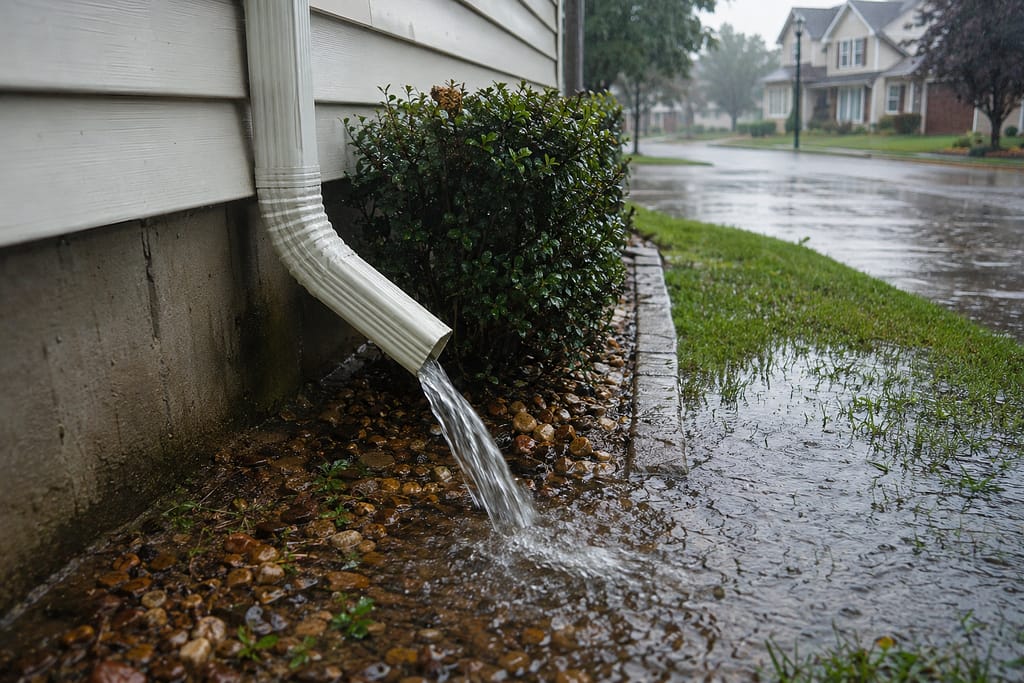
Central Ohio doesn’t flood like the coasts, but anyone who’s lived through a heavy spring storm season, or watched a summer pop-up thunderstorm dump two inches of rain in twenty minutes, knows we get our own version of the problem. Slow-draining yards, water creeping toward the foundation, gutters overflowing onto the siding. It adds up fast, and it’s almost always preventable.
Here’s what actually keeps water away from your house when the forecast turns ugly, starting from the roofline and working down to the ground.
Start With Your Gutters. They’re Doing More Work Than You Think
Your gutter system is the first line of defense. On an average roof, a heavy storm can move thousands of gallons off the surface in an hour. If gutters are clogged, undersized, or pulling away from the fascia, that water doesn’t disappear, it dumps straight down next to your foundation, which is exactly where you don’t want it.
Before flood-risk season hits:
- Clear them out. Leaves, shingle grit, and tennis-ball-sized debris (we’ve seen it) block flow and cause overflow right at the worst possible moment.
- Check the pitch. Gutters should have a slight slope toward the downspouts: about a quarter-inch of drop for every 10 feet. If water pools instead of draining, the hangers may need adjusting.
- Look for separation. Gutters pulling away from the roofline, or sagging in the middle, will spill water along the whole run instead of channeling it where it belongs.
Downspouts: Get the Water Away From the House, Not Just Off the Roof
This is the step people skip, and it’s the one that causes the most foundation trouble. A downspout that dumps water two feet from your foundation wall is barely better than no gutter at all.
- Extend downspouts at least 4–6 feet away from the house. Flexible or rigid extensions are inexpensive and make a real difference during sustained rain.
- Make sure the ground slopes away from the foundation at the discharge point. Water should keep moving, not pool and soak back in.
- Consider underground drainage (a buried downspout line running to a daylight exit or dry well) if your yard is flat or slopes toward the house. This is one of the most effective upgrades for chronically wet foundations.
Grading and Landscaping Matter More Than People Realize
Even a perfect gutter system can’t overcome bad grading. The soil around your foundation should slope away from the house, generally about 6 inches of drop over the first 10 feet.
- Mulch beds, flower beds, and landscaping edging can accidentally create a dam that holds water against the foundation. Walk your perimeter after a storm and see where water is actually sitting.
- Low spots near the house should be filled and re-graded rather than just monitored season after season.
Check Your Siding and Trim for Entry Points
Water doesn’t need a flood to get inside, it just needs a gap. During high-risk periods, water gets driven sideways by wind, and it will find any seam in siding, trim, or flashing that’s come loose or been caulked over instead of properly sealed.
- Look for cracked, warped, or separated siding panels, especially near ground level and around windows and doors.
- Check flashing around windows, doors, and where siding meets the roofline. These transition points are the most common places for water to sneak behind the wall.
- Small gaps might seem harmless, but repeated wind-driven rain during storm season can turn a minor issue into rot or mold behind the wall over a season or two.
Don’t Forget the Roof Itself
Gutters and grading handle water once it’s already left the roof, but the roof surface is where the real volume starts. Before flood-risk season:
- Have any missing, lifted, or damaged shingles addressed. Even a small area of exposed decking can let water in during sustained, heavy rain.
- Check valleys and roof-to-wall transitions, where water concentrates and moves fastest. These are the areas most likely to fail first.
- If your roof is older or has taken hail or wind damage, a professional inspection before storm season gives you a clear picture instead of a guess.
A Quick Pre-Storm-Season Checklist
- Gutters cleaned, pitched correctly, and securely attached
- Downspouts extended 4–6 feet from the foundation, discharging onto sloped ground
- Grading around the house slopes away, no dammed-up mulch beds or low spots
- Siding and trim inspected for gaps, cracks, or loose flashing
- Roof inspected for damaged shingles, especially in valleys and around penetrations
When to Call in a Professional
Most of this is manageable as a homeowner project, but a few situations are worth a second set of eyes: standing water that returns after every storm no matter what you do, visible gaps or soft spots in siding, or a roof you haven’t had inspected in the last couple of years. A quick, no-pressure inspection can usually tell you whether you’re looking at a simple gutter fix or something more, before the next storm makes the decision for you.