
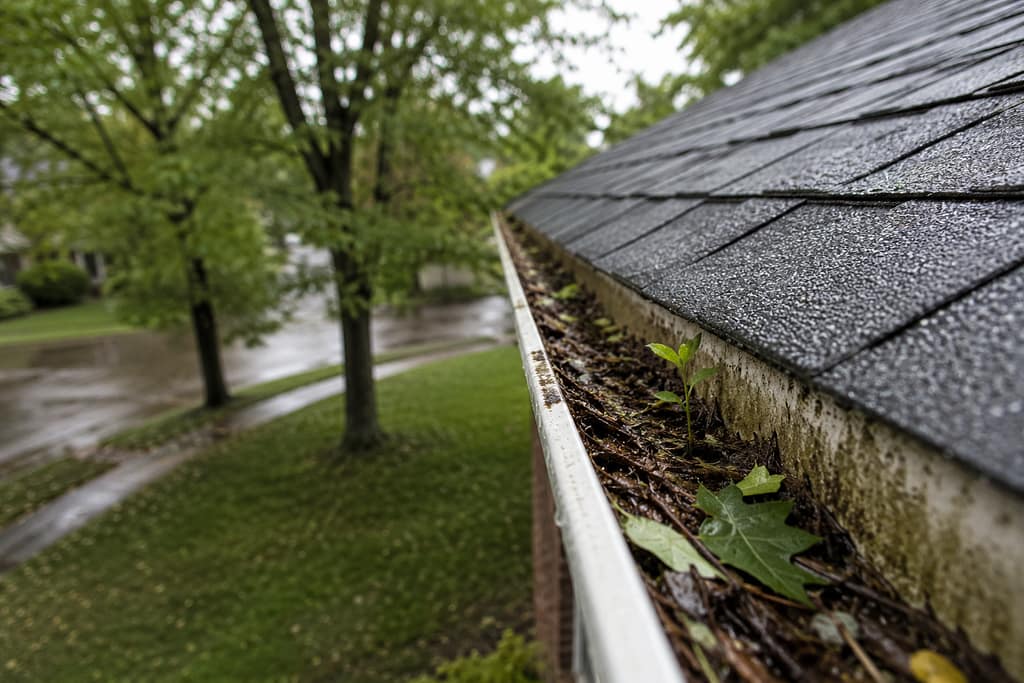
If it feels like Central Ohio has been under a near-constant drizzle this August, you’re not imagining it. Between the heat dome breaks and the string of afternoon storms rolling through Westerville, Dublin, Powell, and Gahanna, a lot of area homes have taken more rain in the last few weeks than in the two months before it combined. That’s put every gutter system in the region to the test — and for a lot of homeowners, it’s exposed problems that were easy to ignore in a dry summer.
Now we’re heading straight into fall, which is historically the hardest season on a gutter system. That timing makes this the exact right moment to get your gutters checked before leaves start piling up and temperatures start dropping.
What a Rainy August Actually Does to Your Gutters
Heavy, repeated rainfall doesn’t just test your gutters — it accelerates wear you might not notice until it becomes a bigger problem.
- Overflow reveals blockages. If you saw water sheeting over the edge of your gutters instead of flowing through the downspouts, that’s usually a sign of a clog, not just heavy rain. Debris that built up over spring and early summer finally had enough water behind it to back up.
- Sagging and pulled fasteners. Gutters are designed to hold flowing water, not standing water. Repeated heavy rain adds sustained weight, and over time that stress can pull hangers loose or cause a section to sag and pool.
- Fascia and soffit exposure. When gutters overflow repeatedly, water runs down behind them instead of through them. That’s one of the more common ways homes in our area end up with fascia board rot — often long before anyone notices, because it’s hidden behind the gutter line.
- Foundation and landscaping runoff. A gutter system that isn’t directing water away properly during heavy rain can dump water right at the foundation line, which is a much more expensive problem than a gutter repair.
None of this is unusual for the region — it’s just what happens when a wet stretch puts real pressure on a system that may already have been due for a look.
Why Fall Raises the Stakes
Rain is one challenge. What comes next is another.
As trees across Central Ohio start dropping leaves over the next couple of months, gutters that are already stressed from an active rain season are going to fill up fast. A gutter that was barely keeping up with rainfall in August can become fully blocked within a few weeks once leaf litter starts accumulating on top of existing debris.
That combination, lingering summer debris plus a fresh layer of fall leaves, is one of the most common reasons we see ice dam damage and interior water intrusion later in the winter. Water that has nowhere to go during a late-fall or early-winter freeze backs up under the roofline, and by the time it shows up as a stain on a ceiling, the source of the problem has usually been sitting there for months.
What We’d Recommend Checking
You don’t need to assume the worst, but a rainy stretch like this one is a good natural checkpoint. Here’s what’s worth looking at, either yourself or with a professional set of eyes:
- Downspout flow. After the next rain, check whether water is actually exiting the downspouts or backing up somewhere along the run.
- Gutter line and hangers. Look for visible sagging, gaps between the gutter and the fascia, or sections pulling away from the house.
- Granule buildup in the gutters. If you’re seeing a heavy amount of shingle granules washing into your gutters, that’s worth a roof inspection on its own — it can be a sign of aging shingles, separate from the gutter issue.
- Signs of water behind the gutter line. Staining, soft spots, or peeling paint on the fascia board are early indicators of the exact kind of hidden damage described above.
- Guard condition, if you have gutter guards installed. Guards reduce debris buildup, but they’re not maintenance-free — they can still get overwhelmed by heavy pollen, seed pods, or a wet season like this one.
Our Take: Inspect Before You Guess
We’d rather a Central Ohio homeowner get a straightforward inspection now than wait until a fall storm turns a manageable gutter issue into an interior repair. A lot of the damage described here is hard to see from the ground, and it’s easy to miss on a quick visual check from a ladder.
If you’ve noticed overflow, sagging, or staining after this stretch of wet weather — or if it’s simply been a while since anyone’s looked at your gutter system — it’s worth getting ahead of it before the leaves start falling in earnest. We serve homeowners throughout Westerville, Dublin, Powell, Hilliard, Gahanna, New Albany, Pickerington, Grove City, Canal Winchester, and Granville, and a gutter and roof inspection is always free, no pressure, no obligation.
Fall in Ohio moves fast. The gutters that get checked now are the ones that won’t cause problems in January.