
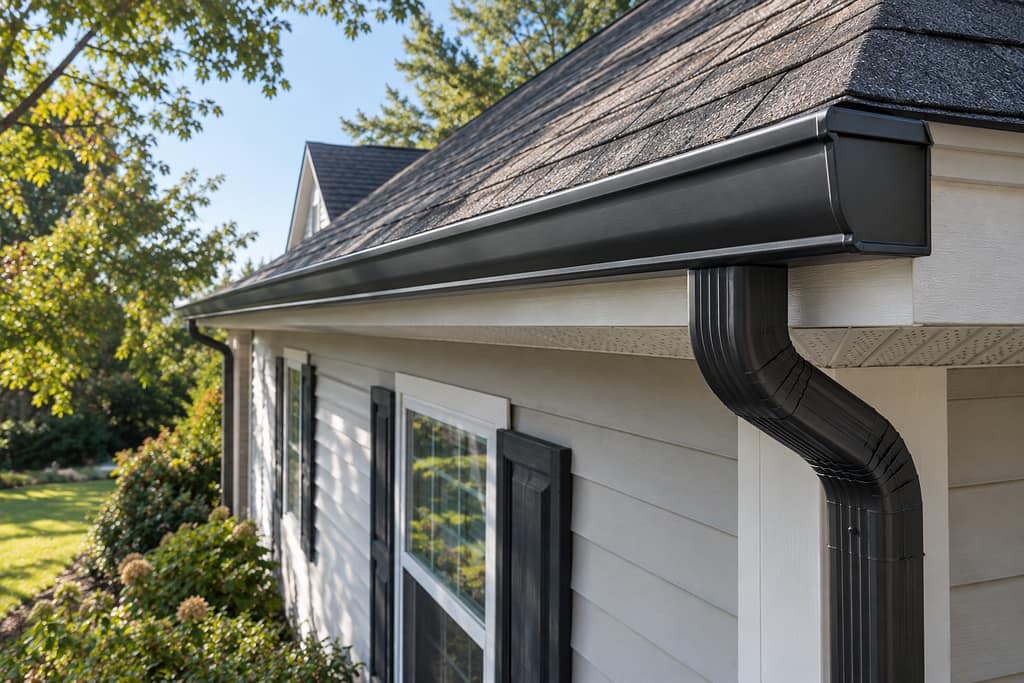
Most homeowners don’t think about their gutters until something goes wrong. A stain shows up on the siding, water pools by the foundation after a storm, or a section pulls away from the fascia and hangs there like a loose tooth.
By then, the gutters have usually been failing for a while. Here’s what a gutter upgrade changes, and why it’s one of the more underrated improvements you can make to a home in Central Ohio.
Gutters Are Part of Your Roof System
Your roof is built to shed water. Your gutters are what carry that water somewhere safe. When they can’t keep up, the water doesn’t disappear. It goes wherever gravity sends it, and that’s usually somewhere you don’t want it.
Ohio makes this job harder than it sounds. We get heavy spring downpours, fast summer storms, freeze-thaw cycles all winter, and a lot of mature trees dropping debris across Dublin, Powell, Hilliard, Gahanna, New Albany, and everywhere in between. Gutters here work hard, and older or undersized systems tend to show it.
The Problems an Upgrade Solves
Overflow and undersized gutters. Many older homes have standard 5-inch gutters and 2×3 downspouts. On a roof with a steep pitch or a large surface area, that setup gets overwhelmed in a hard rain. Stepping up to 6-inch gutters and larger 3×4 downspouts can noticeably increase how much water the system moves, and it’s often the single biggest performance gain.
Sagging and pulled-away sections. Old hidden hangers and spikes loosen over time, especially after a few winters of ice and snow load. Modern hidden hangers spaced closer together hold the gutter tight to the fascia and carry the weight of a full gutter when it’s loaded with water, leaves, or ice.
Leaky seams. Sectional gutters have a seam every 10 feet, and every seam is a potential leak. Seamless gutters are formed on-site from a single piece of aluminum to match your exact roofline, which removes most of those weak points.
Clogs and constant cleaning. If you’re up on a ladder every fall, or paying someone to do it, a quality gutter guard system can cut that maintenance way down. Not every guard is equal, so it’s worth asking what’s being installed and how it handles heavy debris and shingle grit.
Poor drainage at the ground. Even great gutters fail if the downspouts dump water right next to the house. An upgrade is the right time to add extensions or underground drain lines that carry water well away from the foundation.
What You Notice Afterward
The results of a proper upgrade tend to show up in quiet ways:
- Water stays off your siding, so you stop seeing those streaks and stains
- Your landscaping stops washing out along the drip line
- Basements and crawl spaces stay drier during heavy rain
- Fascia and soffit boards stay protected from rot
- Winter ice dams are easier to manage when water has a clear path out
- The house simply looks cleaner and more finished from the curb
None of that is dramatic on a sunny day. It’s what you don’t have to deal with after a storm that makes the difference.
The Hidden Damage You Can’t See From the Ground
Here’s the part most people miss. Failing gutters often cause damage long before you notice a leak. Water that spills behind a gutter can soak the fascia board, work its way into the soffit, and eventually reach roof decking and framing. Rot and moisture problems can build for years out of sight.
That’s why we like to look at the whole picture during an inspection. A gutter that’s dripping in the wrong spot is sometimes the first clue to a bigger issue with fascia, flashing, or roof edge details. Catching that early is far cheaper than repairing it later.
Choosing the Right Material
Most homes do well with seamless aluminum. It’s durable, rust-resistant, and available in a wide range of colors to match your trim and siding. For homes that call for something more premium, such as historic properties or high-end builds, copper is a beautiful, long-lasting option that ages naturally over time. The right choice depends on your home’s style, your budget, and how long you plan to be there.
When It’s Time to Upgrade
Consider it if you notice any of these:
- Water spilling over the edge during normal rain
- Gutters pulling away from the house or visibly sagging
- Peeling paint or stains on fascia and siding
- Standing water or erosion near the foundation
- Frequent clogs, or plants growing in the gutters
- Visible rust, cracks, or patched seams
Gutters are also a natural add-on if you’re already replacing your roof or siding, since everything gets matched and installed to work together.
Not Sure What You Need? Start With an Inspection
You don’t have to guess. We’ll take a look at your gutters, roof edge, fascia, and drainage, tell you honestly what we see, and let you decide from there. No pressure, and if your gutters have plenty of life left, we’ll say so.
If you’re in the Central Ohio area and want a second set of eyes on your home, reach out to Roof Ohio to schedule a free inspection.