Your roof is the single largest line of defense your home has against the elements — and replacing it is one of the most significant investments you’ll make as a homeowner. When the time comes to choose shingles, two options dominate the residential market: architectural (laminate) shingles and 3-tab shingles. They look similar at a glance, but they couldn’t be more different in performance, longevity, and value.
This guide breaks down every dimension that matters — cost, lifespan, wind resistance, curb appeal, and resale value — so you can walk into that roofing conversation with confidence.
What Are 3-Tab Shingles?
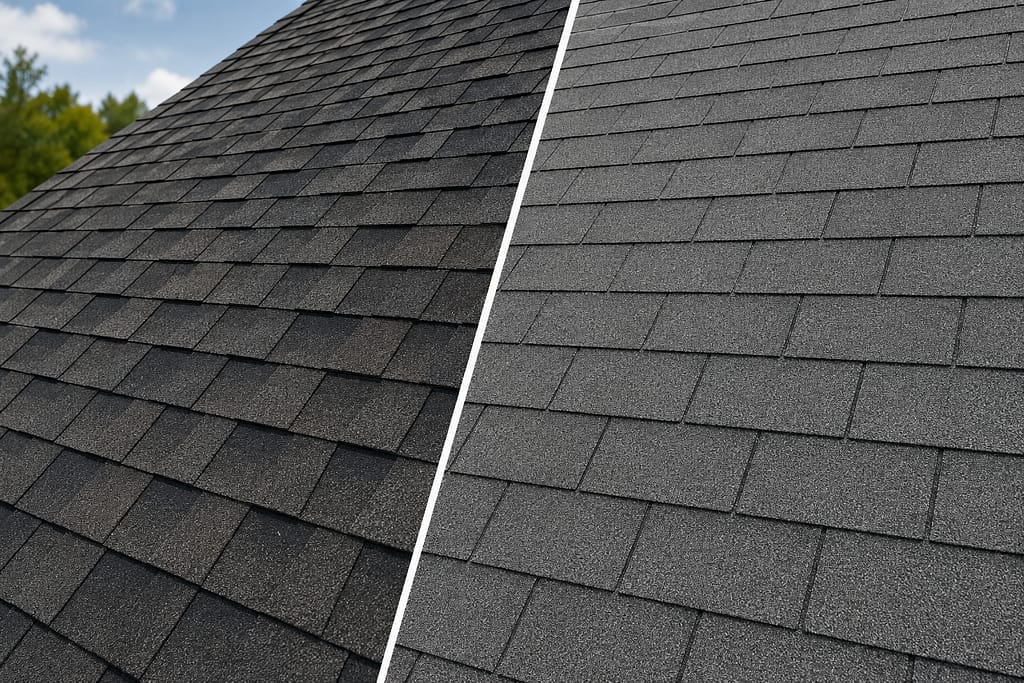
The 3-tab shingle is the classic, no-frills workhorse of residential roofing. Each strip has three evenly-spaced cutouts (“tabs”) along the bottom edge, giving the roof a flat, uniform, almost grid-like appearance from the street.
They are made from a single layer of asphalt-saturated fiberglass mat, which makes them thinner and lighter than their architectural counterparts. For decades they were the go-to affordable option — but the roofing industry has largely moved on.
Key Characteristics
- Single-layer construction — lighter but less durable
- Flat, uniform appearance with a repeating tab pattern
- Weighs approximately 150–200 lbs per square (100 sq. ft.)
- Wind rating typically 60–70 mph
- Lifespan of 15–25 years under normal conditions
- Lower upfront cost — the primary selling point
then there’s the upgrade
What Are Architectural Shingles?
Architectural shingles — also called dimensional or laminate shingles — are built from two or more layers of asphalt-saturated fiberglass bonded together with a strip of asphalt sealant. This laminated construction creates a three-dimensional, textured profile that mimics the look of cedar shake or natural slate.
They became the industry standard over the past two decades, and today account for the majority of new residential roofs installed across North America. The combination of enhanced aesthetics, superior durability, and a comparatively modest price premium makes them the default recommendation of most reputable roofing contractors.
Key Characteristics
- Multi-layer laminated construction — thicker and more rigid
- Dimensional, textured look with depth and shadow lines
- Weighs approximately 240–400 lbs per square
- Wind rating of 110–130 mph (Class F or Class H rated options available)
- Lifespan of 25–50 years, often backed by manufacturer warranties
- Better impact resistance, commonly rated Class 4 (highest)
Side-by-Side Comparison
| Factor | 3-Tab Shingles | Architectural Shingles |
|---|---|---|
| Construction | Single layer | Multi-layer laminate Better |
| Lifespan | 15–25 years | 25–50 years Better |
| Cost per Square | $70–$120 Lower | $100–$200 |
| Wind Resistance | 60–70 mph | 110–130 mph Better |
| Impact Rating | Class 1–2 | Up to Class 4 Better |
| Appearance | Flat, uniform | Dimensional, textured Better |
| Weight / Sq. | ~150–200 lbs | ~240–400 lbs |
| Warranty | 20–25 years (limited) | 30–50 years (many lifetime) Better |
| Resale Value | Minimal impact | Positive ROI Better |
| Availability | Declining | Widely available Better |
The True Cost Conversation
At face value, 3-tab shingles are cheaper. On a 2,000 sq. ft. roof, you might save $1,000–$2,500 upfront by going with 3-tab. That’s real money. But roofing decisions are almost never about the sticker price alone.
The Hidden Math
A 3-tab roof with a 20-year lifespan will likely need full replacement while a quality architectural roof is still years from mid-life. Factor in the labor, disposal fees, and material costs of that second installation and the economics flip decisively in favor of architectural shingles for most homeowners planning to stay put.
When you account for the longer lifespan, the lower frequency of repairs, and the potential savings on homeowner’s insurance premiums (many insurers discount for Class 4 impact-resistant shingles), architectural shingles frequently deliver a lower total cost of ownership over a 30–40 year horizon.
Durability & Weather Performance
This is where the gap between the two products is most dramatic. Architectural shingles simply hold up better — across the board.
Wind
The tabs on a 3-tab shingle are exposed, thin, and vulnerable to uplift. High winds can get under the leading edges and peel shingles away, especially as the adhesive strips age and lose their seal. Architectural shingles, bonded in a laminated mass with a stronger sealant strip, resist wind uplift far more effectively. This matters enormously in the Midwest, Gulf Coast, and anywhere severe storms are routine.
Hail & Impact
The thicker, denser construction of architectural shingles gives them meaningfully better impact resistance. Many architectural products are rated UL 2218 Class 4 — the highest possible rating — which not only protects your roof but can also qualify you for a discount on your homeowner’s insurance policy in many states.
Thermal Movement
Repeated freeze-thaw cycling, UV degradation, and thermal expansion can crack and curl single-layer shingles prematurely. The added mass and bonding of architectural shingles makes them more resistant to this kind of long-term weathering.
Curb Appeal & Resale Value
A roof is one of the first things a prospective buyer notices. A flat, aging 3-tab roof reads as dated — the roofing equivalent of 1990’s builder-grade carpet. Architectural shingles, with their shadow lines, irregular profiles, and resemblance to natural materials, give a home genuine visual weight and character.
💡 Realtor Perspective
Real estate professionals consistently report that a newer architectural shingle roof is a selling point buyers notice and ask about. Remodeling Magazine’s Cost vs. Value report has historically shown roof replacement (using architectural shingles) recovering 60–70% of project cost at resale — and reducing time on market by providing buyer peace of mind.
3-tab shingles offer essentially zero aesthetic advantage and are increasingly seen as a sign that a home hasn’t been well-maintained or modernized.
When Does 3-Tab Make Sense?
To be fair: there are legitimate scenarios where 3-tab shingles remain a reasonable choice.
- You’re selling the home imminently and need a budget repair to close a sale
- The property is a short-term rental or investment flip with a defined exit horizon
- Local building codes or HOA requirements call for a specific low-profile look
- The structure’s roof deck cannot support the added weight of architectural shingles
- You’re patching a small area of an existing 3-tab roof for a matching repair
Outside of these narrow circumstances, the calculus almost universally favors architectural shingles.
Architectural Shingles Win — By a Significant Margin
For the vast majority of homeowners doing a full roof replacement, architectural shingles are the right choice. The moderate upfront premium pays for itself many times over through extended lifespan, dramatically better weather resistance, superior aesthetics, and stronger resale positioning. Unless your situation calls specifically for the lowest possible short-term outlay, invest in the laminate.