
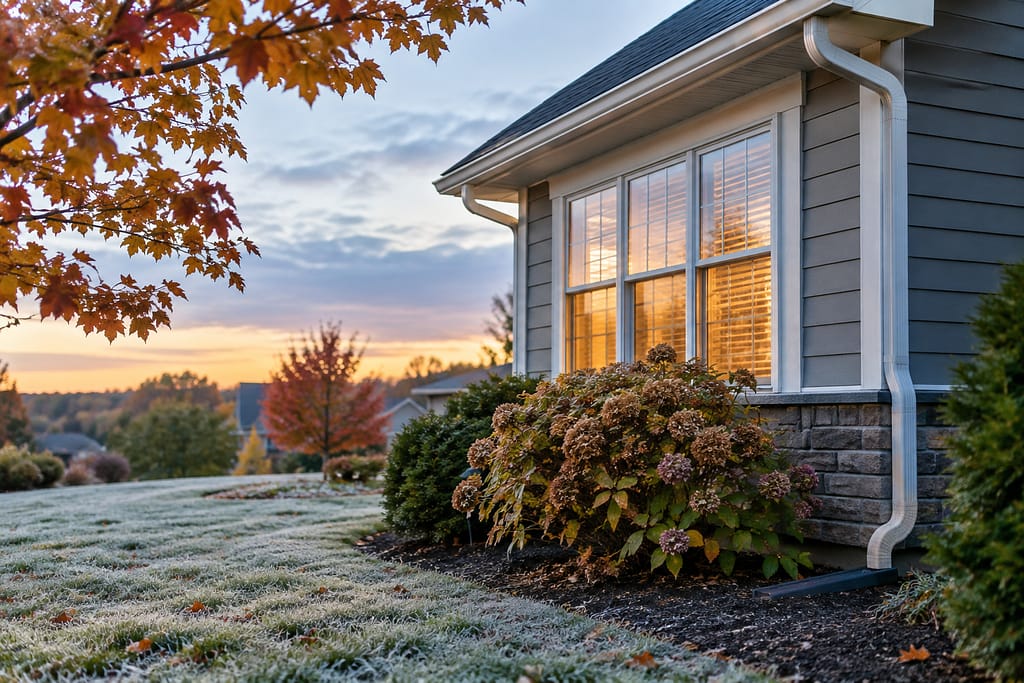
Overnight lows in the 40s are Central Ohio’s early warning. The best time to catch small roof, gutter, and siding problems is before winter shows up.
We haven’t hit freezing yet, but the cooler nights have arrived. Warm afternoons followed by chilly mornings put your home through a lot of temperature swing, and this is the easiest time of year to check things out. Roofs are dry, the weather’s comfortable, and repairs and sealants still bond well. Here’s what to look at from the ground and from inside your home.
1. Gutters Filling Up With Leaves
Leaf drop is starting, and clogged gutters are the most common fall problem we see. Trapped debris holds water, and once freezing nights arrive, that water turns to ice and adds weight that can pull gutters loose. Look for:
- Overflow at the corners or along the front edge during rain
- Sagging sections or gutters pulling away from the fascia
- Plants or seedlings growing out of the gutter (yes, this happens)
- Downspouts that aren’t moving water away from your foundation
Homes with mature trees in Granville, Powell, and Gahanna tend to fill up fast.
2. Moisture in the Attic on Cool Mornings
When cool nights follow warm, humid days, poorly ventilated attics can start collecting condensation on the underside of the roof deck. If you can safely get into your attic on a cool morning, check for damp insulation, dark staining, or a musty smell. It’s an early sign of ventilation or air-sealing problems, and it’s much easier to address now than after a winter of it building up.
Bathroom fans venting into the attic instead of outside are a common culprit.
3. Shingles That Are Curling, Cracked, or Missing
Use binoculars from the ground and scan for:
- Curled or cupped edges
- Cracked or missing shingles
- Exposed nail heads
- Heavy granule buildup at the bottom of downspouts
Fall is a good time to deal with these. Shingle sealant strips and repair adhesives work best in mild temperatures, and they don’t seal as well once it turns cold. A small fix now can keep a problem from getting worse over winter.
4. Flashing and Sealant Around Chimneys, Vents, and Skylights
Anywhere something passes through your roof or meets a wall is a potential leak point. Look for cracked or dried-out sealant, lifted flashing, or rust. Inside, watch for ceiling stains or bubbling paint near those spots, especially after a rain. Sealants also cure better in milder weather, so early fall is a good window to fix these.
5. Gaps Where Animals Can Get In
As nights cool off, squirrels, raccoons, birds, and mice start looking for warm places. Check soffits, roof vents, fascia boards, and the edges of the roof for gaps, chew marks, or loose screens. Once critters find a way in, they’re harder to deal with, and they can damage insulation and wiring.
6. Siding Gaps and Cracks
Vinyl and other siding expands and contracts with temperature. Walk the house and look for loose panels, open seams, or cracks, especially near corners, windows, and doors. Gaps let in moisture and cold air, and caulk and sealant are easiest to apply before it gets cold.
7. Chimney Caps and Exhaust Vents
The first time you fire up the furnace or a fireplace, make sure your chimney cap is intact and that exhaust vents are clear. Look for missing caps, rust, or nests. For anything involving the flue or fireplace itself, a certified chimney sweep is the right call.
Why Now?
Every fix gets more expensive, and more weather-dependent, once the temperature drops. Right now the roof is dry, the weather is safe to work in, and materials bond the way they should. Winter repairs are often possible, but they’re rarely as clean.
When to Get a Professional Opinion
Not everything you find needs a repair. Many times we look at a roof and tell the homeowner it’s in good shape, and we’re glad to. But if you’re seeing missing shingles, interior stains, gutters pulling away, or signs of moisture in the attic, a free, low-pressure inspection is an easy way to know where you stand before winter.
We inspect homes across Dublin, Powell, Hilliard, Gahanna, New Albany, Pickerington, Grove City, Canal Winchester, and Granville, and we’ll give you an honest read on what we find.