When most Columbus-area homeowners think about storm season, they picture hail dents and wind-torn shingles. But siding takes a beating in summer too — and it’s rarely from a single dramatic storm. It’s the slow, cumulative stress of heat, UV exposure, and humidity that adds up over a Central Ohio summer, from the first 90-degree stretch in June through the sticky dog days of August.
Whether you’re in Westerville, Dublin, Powell, Hilliard, Gahanna, New Albany, Pickerington, Grove City, or Canal Winchester, your siding is dealing with the same conditions: intense sun exposure, swings between scorching afternoons and cool evenings, and the kind of humidity that turns a hot day into a sauna. Here’s what that does to your siding — and what to watch for.
1. Heat Causes Expansion and Contraction
Most siding materials — vinyl especially — are designed to expand and contract with temperature changes. But Ohio’s summer swings can be extreme: a surface temperature well over 100°F in direct afternoon sun, dropping 30-40 degrees by early morning. That constant expansion and contraction puts stress on fasteners, seams, and joints.
Over time, this can lead to:
- Warping or buckling, especially on south- and west-facing walls that get the most direct sun
- Loosened nails or fasteners that no longer hold panels securely
- Gaps at seams where panels were designed to overlap snugly
If you’ve noticed a wave-like ripple in your vinyl siding, especially on the sunniest side of your house, that’s a heat-expansion issue, not a manufacturing defect — and it tends to get worse each summer if it isn’t addressed.
2. UV Exposure Breaks Down Materials From the Outside In
UV rays don’t just fade color — they break down the molecular structure of siding materials over time. This is true for vinyl, fiber cement, and wood siding alike, though each shows the wear differently:
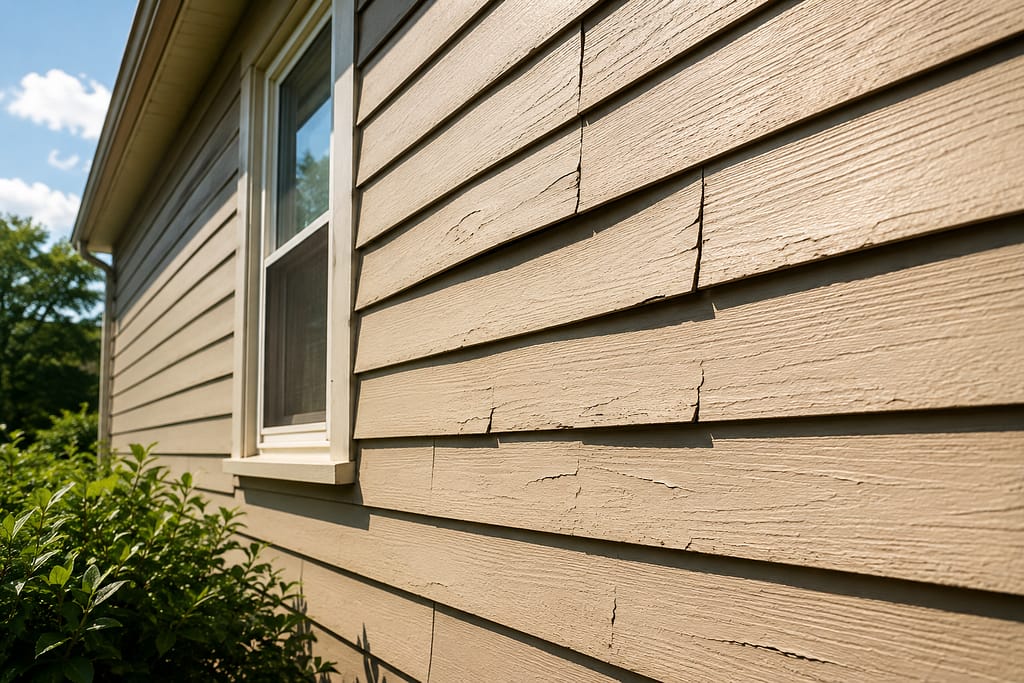
- Vinyl siding can become brittle and prone to cracking, especially at corners and edges, after years of UV exposure
- Fiber cement siding can experience surface chalking or finish degradation if it wasn’t properly painted or sealed
- Wood siding can dry out, crack, and lose paint adhesion faster in direct summer sun
Fading is often the first visible sign — but by the time you notice a color difference between a shaded wall and a sun-exposed one, the material underneath has likely already started to weaken.
3. Humidity and Heat Together Invite Moisture Problems
Central Ohio summers aren’t just hot — they’re humid. That combination creates ideal conditions for moisture to get trapped behind siding, particularly if there are already small gaps, cracks, or areas where caulking has failed.
Trapped moisture behind siding can lead to:
- Mold or mildew growth on the siding surface or sheathing behind it
- Wood rot in the underlying structure, especially around window and door trim
- Algae streaking, particularly on north-facing walls that stay shaded and damp longer
This is one of the reasons a granule-loss or gutter issue on your roof can quietly turn into a siding problem — water that isn’t being properly diverted away from the house often ends up running down exterior walls, accelerating exactly the kind of damage summer heat has already started.
4. Storm Season Overlaps With Heat Season
Ohio’s summer heat doesn’t take a break from severe weather — if anything, the heat dome patterns we’ve been tracking this summer often set the stage for fast-moving storms with damaging wind and hail. Siding that’s already stressed from UV exposure and heat cycling is more vulnerable to cracking or panel loss when a storm does roll through.
This is also where we remind homeowners to be cautious about storm chasers who show up door-to-door immediately after a weather event. A legitimate, local contractor will do a full inspection, document damage clearly for your insurance carrier, and won’t pressure you into signing a contract on the spot.
5. What Ohio Homeowners Should Look For This Summer
A quick walk around your home’s exterior can catch small issues before they become expensive ones:
- Warping or waviness, especially on sun-facing walls
- Cracks or splits, particularly at corners, seams, and around windows
- Fading inconsistency between shaded and exposed sections
- Gaps or loose panels where fasteners may have worked loose
- Soft spots near the bottom of walls or around trim, which can indicate trapped moisture
If your siding was already damaged by a storm — hail dents, wind-lifted panels, or impact cracks — summer heat will only accelerate the deterioration of that damaged area. And if a claim is involved, remember that under Ohio Administrative Code 3901-1-54, your insurer is required to restore your home to a reasonably comparable appearance, not just patch the damaged section with mismatched materials.
When to Call a Professional
If you’re noticing any of these warning signs, it’s worth getting a professional opinion before the next round of summer storms or before another season of heat cycling makes the problem worse. At Roof Ohio, we inspect roofs, siding, and gutters together, since damage in one area often shows up as a symptom in another.
Serving Westerville, Dublin, Powell, Hilliard, Gahanna, New Albany, Pickerington, Grove City, Canal Winchester, and the greater Central Ohio area.
📞 Call us at 614-741-3333 or visit us here to schedule your free inspection.