
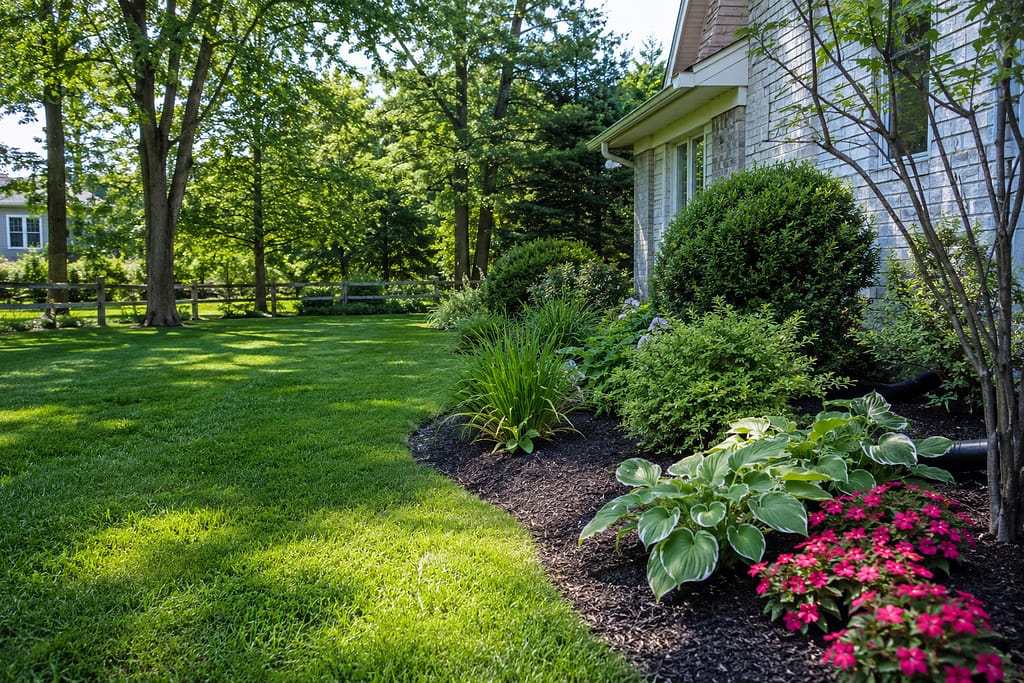
July in Central Ohio is no joke. The heat rolls in, the humidity climbs, and your yard is either thriving or quietly dying one brown patch at a time. With temperatures regularly pushing into the 90’s and storms that can roll through fast and hard, this month demands a little more attention from homeowners who want to protect their property and keep their curb appeal intact.
Here are the most important landscaping moves to make right now, before the dog days of summer get away from you.
1. Water Smart, Not More
The instinct when grass goes brown is to water constantly. Fight that instinct. Most lawns in Central Ohio go dormant in July heat. That brownish tint isn’t death, it’s survival mode. Over-watering dormant grass invites fungal disease and wastes money.
If you do water, do it deeply and infrequently. One inch of water, two or three times a week, early in the morning (before 10 AM) is far better than light daily watering. This trains roots to grow deep rather than staying shallow near the surface where heat does the most damage.
Avoid watering in the evening. Moisture sitting on grass overnight is a welcome mat for lawn fungus, a real problem in Ohio’s humid summers.
2. Raise Your Mower Deck
This is one of the simplest things you can do in July with one of the biggest payoffs. Set your mower height to 3.5 to 4 inches. Taller grass blades shade the soil, which reduces moisture evaporation and keeps root zones cooler.
Cutting grass too short in summer stresses the plant, bakes the soil, and opens the door for crabgrass and other opportunistic weeds to move in. The “one-third rule” applies all year: never cut more than one-third of the blade in a single mowing.
And keep your blades sharp. Dull blades tear grass rather than cut it cleanly, leaving ragged ends that turn brown and make lawns look stressed even when they’re not.
3. Mulch Your Beds, If You Haven’t Already
If your mulch layer is looking thin, July is still a fine time to refresh it. A 2- to 3-inch layer of mulch around trees, shrubs, and garden beds does several things at once: it retains soil moisture, keeps root zones cooler, suppresses weeds, and gives your landscaping a clean, polished look.
Keep mulch pulled a few inches away from the base of trees and shrubs. Mulch piled directly against bark creates conditions for rot and can attract pests.
One note worth mentioning: if mulch butts up against your home’s foundation, pull it back. Organic material sitting against a foundation, or against wood siding, traps moisture and can accelerate deterioration over time. A couple of inches of clearance goes a long way.
4. Trim Trees and Shrubs With Your Roof in Mind
Summer is a natural time for growth, which means branches you trimmed back in spring may already be pushing toward the house again. Walk your property and look up. Any branches hanging over your roof or making contact with your shingles need to come back.
Overhanging branches cause more damage than most homeowners realize. They drop debris into gutters, constantly abrade shingles when the wind blows, trap moisture on the roof surface, and give squirrels and other pests a direct bridge onto your home.
The general guideline is to maintain at least 6 to 10 feet of clearance between tree limbs and your roofline. It also gives you a safer margin ahead of the summer storms that can roll through the Columbus area fast and with little warning.
5. Check Your Drainage Before the Next Rain
July brings some of the most intense afternoon and evening thunderstorms of the year in Central Ohio. If your yard has low spots where water pools after rain, or if water runs toward your home’s foundation rather than away from it, now is the time to address it, not after the next downpour.
Walk your yard after the next rainfall and watch where water moves. Proper grading should slope away from your foundation at roughly a 6-inch drop over the first 10 feet. If it doesn’t, you may need to add soil and regrade, or look at French drain solutions for persistent problem areas.
While you’re at it, look at where your downspouts discharge. They should be directing water at least 4 to 6 feet away from the foundation. Downspout extensions are inexpensive and easy to add. and they make a real difference in keeping water where it belongs.
6. Feed Your Trees, Not Just Your Lawn
Most homeowners fertilize their grass without giving much thought to the trees on their property. But trees under heat stress in July can benefit from a slow-release fertilizer applied around the drip line (the outer edge of the canopy, where feeder roots are most active).
Avoid heavy nitrogen fertilization of your lawn in July, as it pushes fast, weak growth that burns easily. Save your lawn fertilizer program for September, when Central Ohio grass enters its best recovery window heading into fall.
7. Get Your Gutters Clear Now
This one overlaps with your home maintenance, but landscaping is a major driver: if your trees are dropping seed pods, small branches, or early leaves (common in drought stress), they’re going straight into your gutters.
Clogged gutters in July mean that when the big storms hit, water backs up, spills over the edge, and saturates the soil right next to your foundation. It also creates standing water in your gutters that can work its way under roof decking over time.
If you have trees close to the house, a midsummer gutter check is worth doing even if you cleaned them out in the spring.
8. Plant for Fall Now
July feels like the middle of summer, but it’s actually a good planning window for fall color. Mums, ornamental kale, and asters can be started or planned now for September planting. If you have bare spots in your beds, consider planting heat-tolerant natives like coneflower (echinacea), black-eyed Susans, or ornamental grasses, all of which thrive in Ohio summers and come back year after year.
Native plantings also require significantly less water once established, which is a practical advantage during dry stretches.
Protect Your Yard and Your Home This Summer
The steps above will keep your landscaping healthy through July’s heat, but they also protect what’s underneath and around it: your foundation, your siding, your gutters, and your roof. A well-maintained yard isn’t just about looks. It’s a layer of defense for your home.
If you’ve noticed any issues with your roof, gutters, or exterior while you’ve been outside doing yard work this summer, we’re happy to take a look. Roof Ohio serves homeowners across the Columbus metro — from Westerville and New Albany to Dublin, Hilliard, and beyond.
Schedule a free inspection or give us a call to get on the calendar before storm season peaks.