
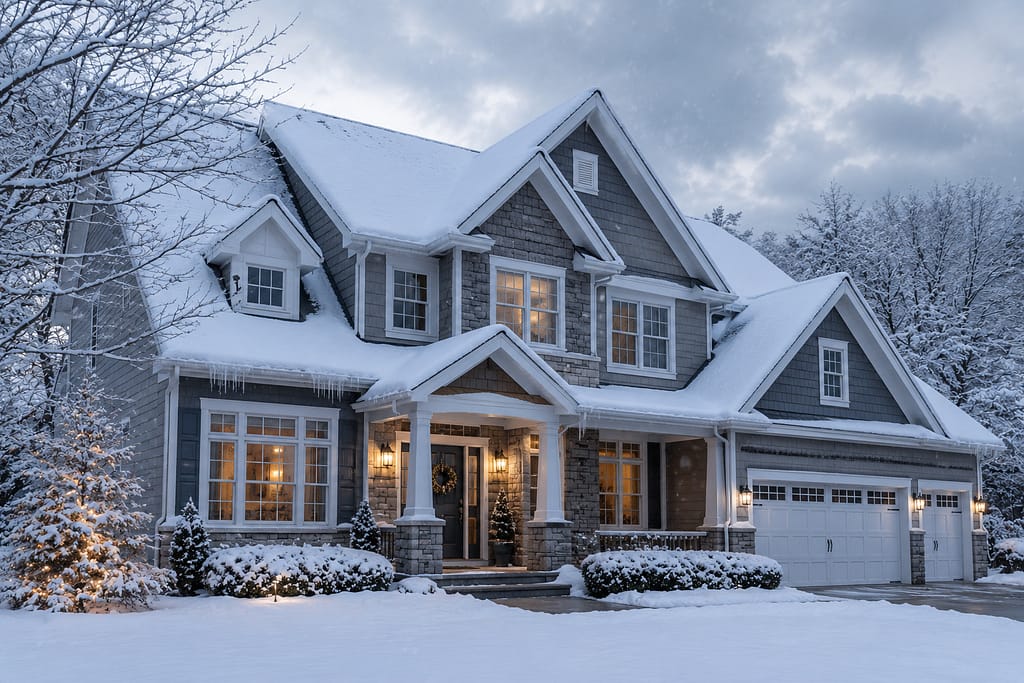
If you live somewhere that sees real winters, the kind with heavy snowfall, freeze-thaw cycles, and ice dams thick enough to slide a shovel under, you’ve probably heard a roofing contractor mention “ice and water shield” at some point. Maybe you nodded along and then quietly wondered what it actually does and whether it’s worth the extra cost. The short answer: it absolutely is.
What Is Ice and Water Shield?
Ice and water shield is a self-adhering, rubberized asphalt membrane that gets installed directly on your roof deck before shingles go on. Unlike traditional felt paper underlayment, which is essentially just a temporary water-resistant layer, ice and water shield is waterproof — and it seals itself around nails and staples driven through it, which is where a lot of water intrusion actually happens.
The “synthetic” part of the name refers to modern versions of the product that replace older organic-felt-based barriers with woven or spunbond polypropylene. Synthetic underlayments are lighter, stronger, more UV-resistant, and far more tear-resistant than their felt predecessors.
The Problem: Ice Dams
To understand why this product matters so much in cold climates, you need to understand ice dams.
Here’s how they form: Heat escaping from your living space warms the roof deck above it, melting the snow that’s sitting on top. That meltwater runs down the slope toward the eaves — but the eaves overhang the exterior walls and don’t have warm air underneath them. The water refreezes there, building up a ridge of ice. Once that ice ridge is thick enough, it starts backing water up underneath your shingles.
Asphalt shingles are designed to shed water running downhill. They are not designed to hold back water that is being pushed upward against them. That’s the exact scenario an ice dam creates — and it’s how water ends up in your attic, soaking your insulation, rotting your sheathing, and eventually staining the ceiling of the room below.
This isn’t a rare edge case. In climates that regularly see temperatures swinging above and below freezing — the Midwest, the Northeast, the Great Lakes region, much of Canada — ice dams are a near-annual event for homes without proper protection.
Where Ice and Water Shield Does Its Job
Building codes in most cold-climate regions require ice and water shield along the eaves — the area most vulnerable to ice dam backup — typically extending from the edge of the roof to at least 24 inches inside the interior wall line. Some codes require more. Smart roofing contractors often install it in additional high-risk zones:
- Valleys, where two roof planes meet and water concentrates
- Around chimneys, skylights, and vents, where flashing is present and penetrations create opportunities for leaks
- Low-slope sections of the roof where water moves more slowly
- Rakes and ridges in especially severe climates
In areas with particularly punishing winters, some homeowners opt to cover the entire roof deck in ice and water shield. It’s more expensive upfront, but it effectively turns the roof deck itself into a waterproof shell. If a shingle blows off in a storm, if a branch punctures the surface, if ice backs up further than expected — the water still has nowhere to go but off the edge.
Synthetic vs. Traditional: Why It Matters
Older felt-based ice and water products have mostly done the job for decades, but synthetic versions have pulled ahead in several meaningful ways:
Durability during installation. Felt tears easily when walked on in cold temperatures. Synthetic underlayment holds up far better, which means fewer gaps, fewer tears, and a more reliable finished installation.
UV resistance. If a re-roofing project gets interrupted and the underlayment sits exposed for days or weeks, synthetic products won’t degrade as quickly. Felt can break down and become brittle fast.
Weight. Synthetic rolls are significantly lighter than comparable felt rolls, which makes the job easier and reduces the chance of a contractor taking shortcuts to save labor.
Slip resistance. Many synthetic products have textured surfaces that give workers better footing on a steep, cold roof — a real safety consideration.
Long-term performance. The rubberized self-sealing property of quality ice and water membranes holds up far longer than felt. Around nail penetrations especially, the seal remains effective years after installation.
The Cost Question
Adding ice and water shield to a full re-roofing project typically adds somewhere between $300 and $1,500 to the total cost, depending on the size of the roof and how much of it gets covered. Installing it only at the eaves and valleys is on the lower end; full-coverage is higher.
Compare that to the cost of a single ice dam water intrusion event. Water damage remediation — drying out insulation, replacing damaged sheathing, repairing a stained ceiling, dealing with any mold that’s had time to grow — routinely runs into the thousands. Your homeowner’s insurance may or may not cover it, and repeated claims affect your premiums.
The math isn’t complicated.
What It Can’t Do Alone
Ice and water shield is not a substitute for proper attic insulation and ventilation. The real fix for ice dams is keeping the roof deck uniformly cold by stopping heat from escaping your living space in the first place — that means air sealing the attic floor, adding insulation where needed, and making sure your soffit and ridge vents are working properly.
Think of ice and water shield as the last line of defense. It’s there for the events that insulation and ventilation couldn’t fully prevent — the brutal cold snap that overwhelmed an otherwise well-insulated home, the section of roof over a garage that can never be perfectly air-sealed, the surprise storm that piled more snow than anyone anticipated. When something gets through, the barrier is what keeps it from becoming a disaster.
Bottom Line
If you’re in a region that sees winter — real winter, not a light frost in January — and you’re putting a new roof on or replacing an aging one, ice and water shield shouldn’t be an optional line item you skip to shave the budget. It’s one of the most cost-effective layers of protection you can add to a home, and it does something no shingle, no matter how premium, can do on its own: it seals the roof deck against the water that ice dams force backward and upward against everything above it.
Talk to your contractor about where they’re installing it, how far up the eave they’re taking it, and whether a synthetic product is in the quote. Those are the right questions to ask — and now you know why they matter.