
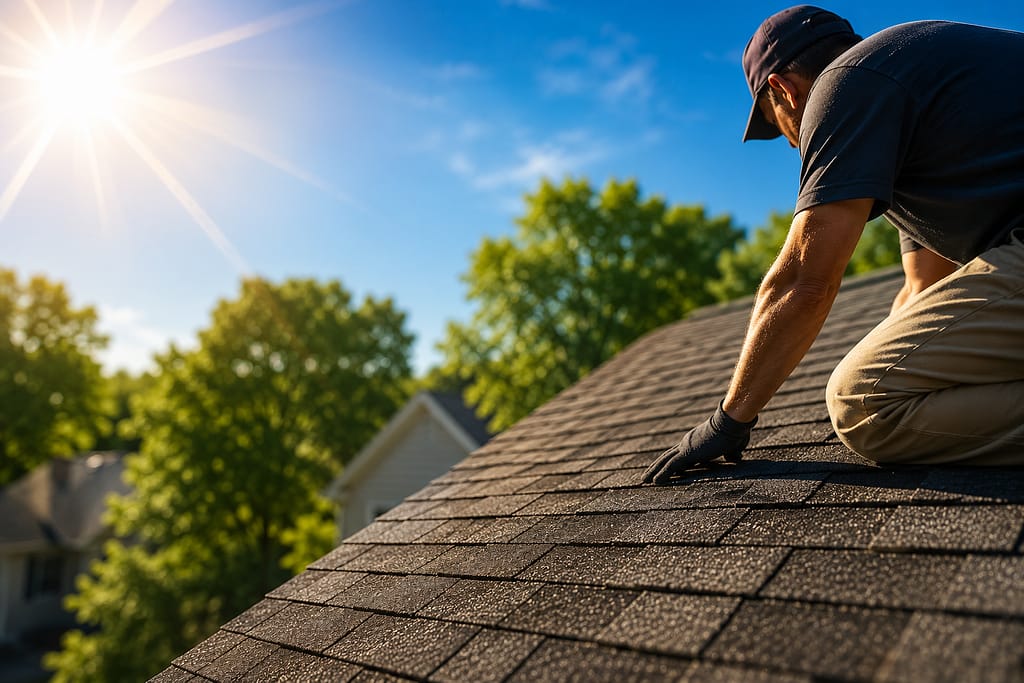
When most homeowners think about roof damage, they picture wind, hail, and heavy rain. Those are real threats — but there’s a quieter, slower force that does serious damage to Central Ohio roofs every single summer, and almost nobody talks about it: ultraviolet radiation.
By the time August rolls around in Columbus and the surrounding areas, your roof has been baking under intense UV exposure for months. That daily assault adds up, and a mid-summer inspection is one of the smartest maintenance moves you can make as a homeowner.
What UV Actually Does to Roofing Materials
Asphalt shingles are the most common roofing material in Ohio, and they’re particularly vulnerable to UV degradation. Shingles are manufactured with oils that keep them flexible and water-resistant. UV radiation breaks those oils down over time, causing shingles to dry out, curl at the edges, and become brittle. Once that flexibility is gone, a shingle that looked fine last fall can crack under foot traffic, thermal expansion, or even just the weight of debris.
The granule loss you might notice in your gutters or on the driveway after a rain? That’s a direct symptom of UV damage. Those granules aren’t decorative — they’re a sacrificial UV-blocking layer. As they shed, the underlying asphalt is exposed to even more direct sun, accelerating the degradation cycle.
The Heat Factor Is Separate — and Stacks on Top
UV damage and heat damage are related but distinct. On a sunny July day in Columbus, roof surface temperatures can easily reach 150–170°F, even when air temperatures are in the mid-80s. That thermal stress causes repeated expansion and contraction across every seam, nail head, and flashing joint on your roof. Over the years, that movement works fasteners loose and opens up small gaps around chimneys, vents, and skylights that have nothing to do with storm activity.
A summer inspection catches these heat-cycle issues before they turn into interior water intrusion.
What an Inspector Is Looking For in Summer
A thorough summer roof inspection covers things that become visible specifically because of warm-season exposure:
- Shingle cupping or curling — the edges turning upward or the center dipping down, both signs of UV-driven drying
- Blistering — bubbles forming in the shingle surface where trapped moisture vaporizes under intense heat
- Granule loss patterns — concentrated loss on south- and west-facing slopes that take the most direct afternoon sun
- Cracked caulk and dried sealant — around flashings, pipe boots, and ridge vents, where UV and heat cause rubber and caulk to shrink and crack
- Fading or color inconsistency — a visual indicator of accelerated UV wear on specific sections, sometimes pointing to inadequate ventilation underneath
Ohio’s Sun Angle Matters More Than You Think
Central Ohio sits at a latitude where summer sun angles are steep — meaning south-facing roof slopes take a much more direct hit than north-facing ones. If you have a traditionally-pitched roof with a hard south exposure, that side of your roof may be aging measurably faster than the rest. Knowing that going into fall and winter is valuable information.
The Storm Argument Is Secondary — But Still Real
Yes, Ohio gets its share of summer thunderstorms, and any inspection worth doing will note hail strikes or wind damage if they’re present. But those are visible and acute — you know when a bad storm rolled through. UV damage is invisible and cumulative. It’s the kind of thing that makes a 15-year-old roof act like it’s 20.
When to Schedule
Mid-summer — roughly June through August — is the sweet spot. Early enough that you have time to schedule any repairs before fall, and late enough that several months of UV exposure have made any developing issues apparent. Most reputable roofing contractors in the Columbus area offer free inspections, so the barrier to getting eyes on your roof is low.
If your roof is more than 10 years old and you haven’t had it looked at since last year’s storm season, this summer is a good time to change that. Get started today.