Most homeowners blame their HVAC system when summer energy bills spike — but the real culprit is often hiding right above their heads. A damaged or poorly maintained roof can turn your home into an oven, forcing your air conditioner into overdrive and costing you hundreds of dollars every season.
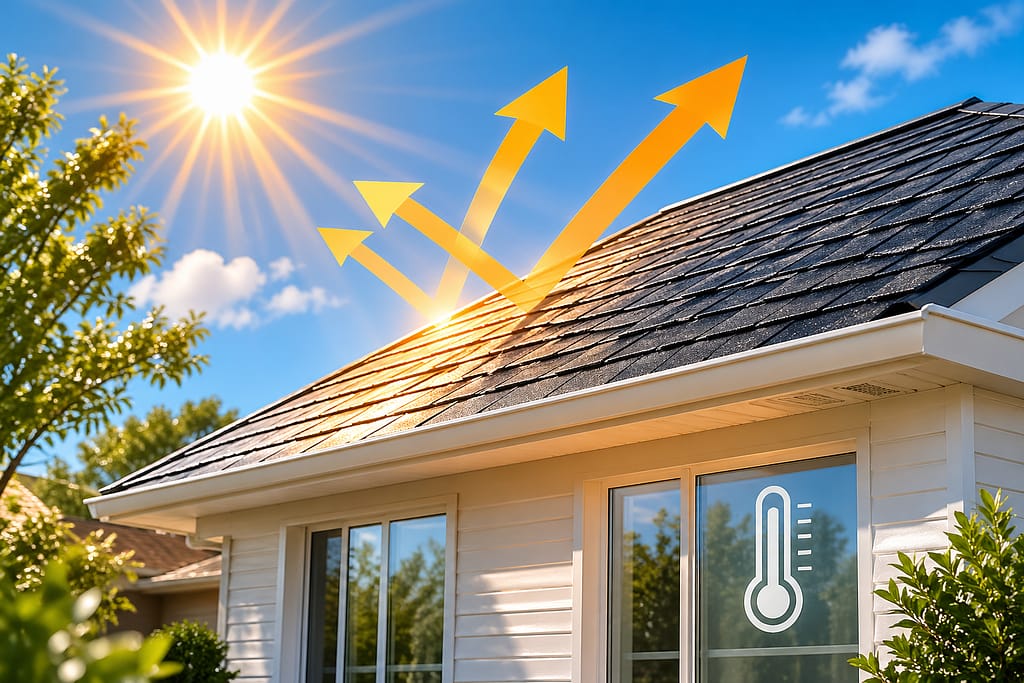
As temperatures climb in spring and peak through summer, your roof becomes one of the most critical components of your home’s energy efficiency system. It’s the first line of defense against the sun’s radiant heat — and when it fails, every other system in your home pays the price.
The good news? Most roof-related energy problems are identifiable and fixable. Understanding which issues matter most — and what they’re actually costing you — is the first step toward a cooler home and lower bills.
5 Roof Problems That Inflate Your Energy Bill
Poor or Missing Insulation
Insulation in your attic keeps conditioned air inside and outdoor heat out. When it’s degraded, compressed, water-damaged, or simply inadequate, heat floods into your living spaces all day long — and your AC never catches up.High Impact — Up to 30% cooling loss
Inadequate Attic Ventilation
Without proper airflow through ridge vents, soffit vents, and attic fans, heat becomes trapped in your attic — sometimes reaching 150°F or higher. That superheated air radiates down into your living areas and bakes your roofing materials from the inside out.High Impact — Can double cooling load
Damaged or Missing Shingles
Cracked, curled, or missing shingles aren’t just an aesthetic or leak concern — they expose your roof deck and underlayment to direct sun, dramatically reducing your roof’s ability to reflect heat. Even a few compromised shingles can create thermal hot spots that overwhelm your insulation.Medium-High Impact — Localized heat gain
Water Damage & Wet Insulation
Even a small, slow roof leak can silently destroy your attic insulation over time. Wet insulation loses up to 40% of its R-value — meaning it provides almost no thermal resistance. Moisture also promotes mold growth, which further degrades materials and air quality.High Impact — Insulation R-value collapse
Failed Flashing & Air Gaps
Flashing seals the joints around chimneys, vents, and skylights. When it fails, it doesn’t just allow water in — it creates air gaps where your cooled indoor air escapes and hot outdoor air infiltrates. These invisible leaks are a constant, invisible drain on your HVAC system.Medium Impact — Continuous air infiltration
A single degree rise in your attic temperature forces your air conditioner to work measurably harder. In peak summer, a compromised roof can add $50–$150 to your monthly energy bill — silently, month after month.— Home Energy Council Estimate
How Roof Problems Amplify Your AC’s Workload
It’s important to understand that roof problems don’t work in isolation — they trigger a chain reaction throughout your home’s thermal envelope. Here’s how a single issue can cascade into a serious energy problem:
When shingles are damaged, solar heat penetrates more deeply into the roof deck. That heat builds in the attic, especially if ventilation is also compromised. Your insulation — already working hard — struggles to prevent that heat from radiating into the rooms below. Your thermostat registers the rising temperature and signals the AC to kick on. But because conditioned air is also escaping through failed flashing or gaps, the cycle never ends efficiently. Your AC runs longer, works harder, and wears out faster — all because of what’s happening above the ceiling.
This is why homeowners often notice that their energy bills creep up gradually over several years. Each problem compounds the others, and the full cost only becomes visible when you compare bills year over year — or when you finally get a roofing inspection.
Warning Signs Your Roof Is Hurting Your Energy Bills
You don’t need to wait for a visible leak to know your roof is affecting your energy costs. Watch for these red flags, especially as spring arrives and temperatures start climbing:
🔍 Homeowner Inspection Checklist
- Your energy bills have increased noticeably compared to the same months last year
- Certain rooms feel consistently warmer than others, especially upper-floor bedrooms
- Your AC runs almost constantly on hot days without effectively cooling the home
- You notice shingles that are curling, cracking, buckling, or visibly missing
- Granules from asphalt shingles accumulate in your gutters (a sign of advanced wear)
- Your attic feels excessively hot — noticeably hotter than outdoor temperatures
- You spot daylight through your attic boards or around vents and flashing
- There are water stains on ceilings or walls, even faint or old-looking ones
- Insulation in your attic appears matted, discolored, or uneven
- Your home’s upstairs HVAC ductwork shows signs of condensation or sweating
Roof Upgrades That Pay for Themselves in Energy Savings
If you’ve identified any of the issues above, the silver lining is that roofing improvements often deliver one of the highest returns on investment of any home upgrade — especially in warm climates where cooling costs dominate.
Radiant barrier sheathing installed under your roofing material reflects solar radiation before it enters the attic, reducing attic temperatures by up to 30°F. Cool-roof shingles, rated by ENERGY STAR, use reflective pigments to bounce heat away instead of absorbing it — and can qualify for federal tax credits.
Even simpler fixes deliver real savings. Resealing and replacing worn flashing eliminates air infiltration. Adding proper ridge and soffit venting creates a passive convective airflow that continuously exhausts trapped heat without any electricity. Re-insulating an attic to current code (typically R-38 to R-60 depending on your climate zone) can cut cooling costs by 15–25%.
Many roofing improvements also qualify for federal energy efficiency tax credits under the Inflation Reduction Act — so the savings begin before you even flip on the AC.
The bottom line: your roof is an energy system, not just a weather shield. Treating it that way — with regular inspections each spring, prompt repairs, and thoughtful upgrades — is one of the smartest financial decisions a homeowner can make. Don’t wait until you see a drip. By then, the energy losses have been adding up for months, or years.
Schedule a professional roof inspection this spring. What you discover might surprise you — and what you save might surprise you even more.
Don’t Let Another Summer Pass You By
A professional spring roof inspection is the fastest way to identify energy-draining problems before peak cooling season hits. Most inspections take under an hour — the savings can last for years. Schedule a Free Inspection