Your roof takes a beating year after year — blistering summers, heavy snowfall, hailstorms, and the occasional fallen branch. So when something goes wrong, one of the first questions homeowners ask is: Will my insurance cover this? The answer is more nuanced than a simple yes or no, and understanding how insurers evaluate roof claims can save you thousands of dollars and a lot of frustration.
The Core Principle: Sudden Damage vs. Gradual Deterioration
Insurance is designed to protect you from sudden, unexpected events — not the slow march of time. This is the most important concept to understand when it comes to roof claims.
Insurance typically covers:
- Damage from windstorms and hurricanes
- Hail damage
- Lightning strikes and resulting fire
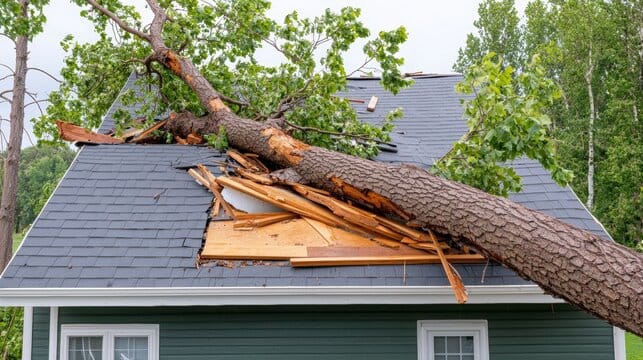
- Falling objects (trees, debris, etc.)
- Ice dams and weight of snow (in some policies)
- Vandalism
Insurance typically does NOT cover:
- Normal wear and tear
- Age-related deterioration
- Poor maintenance or neglect
- Manufacturer defects
- Damage that was pre-existing when you bought the policy
If your 25-year-old roof is simply reaching the end of its lifespan and starts leaking, don’t count on your insurer to foot the bill. That’s considered a maintenance issue, and it’s your responsibility as a homeowner.
How Your Roof’s Age Affects Your Claim
Age is one of the biggest factors insurers consider — and it can dramatically change how much you receive.
Most standard asphalt shingle roofs have a lifespan of 20–30 years. If your roof is relatively new and gets damaged by a covered event, you’re in good shape. But if your roof is older, two things can happen:
1. Actual Cash Value (ACV) Settlements Some policies pay you the current value of your roof, not what it costs to replace it. A 15-year-old roof that would cost $15,000 to replace might only be worth $6,000 in actual cash value after depreciation. You’d receive $6,000 (minus your deductible) and be responsible for the rest.
2. Replacement Cost Value (RCV) Settlements Better policies pay replacement cost — meaning they’ll cover the full cost to replace your roof with a similar one, regardless of depreciation. This is worth the higher premium if you can get it.
Some insurers won’t even offer RCV coverage on roofs older than 10–15 years. Always read your policy carefully and ask your agent which type of coverage you have.
What Insurers Look for During an Inspection
After you file a claim, an insurance adjuster will inspect your roof. Here’s what they’re evaluating:
- Cause of damage — Was it a covered peril like hail or wind, or is it wear and tear?
- Extent of damage — Is the damage isolated to a small section, or widespread?
- Pre-existing conditions — Were there signs of prior damage or deferred maintenance?
- Age and condition — How old is the roof, and how well has it been maintained?
- Documentation — Do you have records of past repairs, maintenance, or the original installation?
Adjusters are trained to spot the difference between hail damage and blistering from UV exposure, or wind damage versus shingles that were already lifting due to age. This is why having your own roofing contractor present during the inspection — or getting an independent assessment — can be incredibly valuable.
How to Strengthen Your Claim
If you believe your roof damage is covered, here’s how to give yourself the best chance of a successful claim:
Act quickly. Most policies require you to report damage promptly. Waiting too long can give the insurer grounds to deny your claim, since delays can allow secondary damage to occur.
Document everything. Get a professional roof inspection, we take photos and video of the damage as soon as it’s safe to do so. Capture wide shots and close-ups, and note the date the damage occurred.
Don’t make permanent repairs before the adjuster visits. You can make temporary fixes to prevent further damage (and you should — failure to mitigate damage can hurt your claim), but don’t replace the roof before the adjuster has seen it.
Keep maintenance records. If you can show that you’ve been a responsible homeowner who services and maintains the roof regularly, it’s harder for an insurer to pin the blame on neglect.
When Insurance Will Pay for a Full Replacement vs. Repairs
Insurance companies will push for the least expensive option that restores your roof to its pre-damage condition. That often means repairs rather than a full replacement — even if you’d prefer a new roof.
You’re more likely to get a full replacement when:
- The damage is widespread (typically affecting more than 25–30% of the roof)
- Matching shingles are no longer available, and a partial repair would create a visually inconsistent result
- The structural integrity of the roof is compromised
- Local building codes require bringing the entire roof up to current standards when repairs are made (this is sometimes covered under “ordinance or law” coverage — check your policy)
You’re more likely to get repairs only when:
- Damage is limited to a small section
- Matching materials are available
- The rest of the roof is in sound condition
Common Reasons Claims Get Denied
Understanding why claims are denied can help you avoid the same fate:
- Maintenance exclusions — If the insurer determines the damage resulted from lack of upkeep, the claim is denied.
- Age exclusions — Some policies explicitly exclude roofs over a certain age.
- Policy lapses — If your coverage lapsed before the damage occurred, you have no claim.
- Late reporting — Waiting months to report storm damage raises red flags.
- Filing too many claims — A history of frequent claims can lead to non-renewal, though it’s not grounds to deny an individual valid claim.
The Bottom Line
Insurance will replace your roof when damage is caused by a covered, sudden event — but the age of your roof, the type of policy you hold, and how well you’ve maintained your home all play major roles in the outcome. The best time to understand your coverage is before disaster strikes, not after.
Review your policy today. Ask your agent whether you have ACV or RCV coverage. Keep up with routine maintenance and hold onto those records. And if a storm does roll through, act fast, document thoroughly, and don’t be afraid to advocate for yourself throughout the claims process.
Your roof protects everything inside your home. Make sure you understand how to protect it in return. At Roof Ohio, we are well versed in working with insurance companies. Contact us today to get FREE Detailed Inspection.