
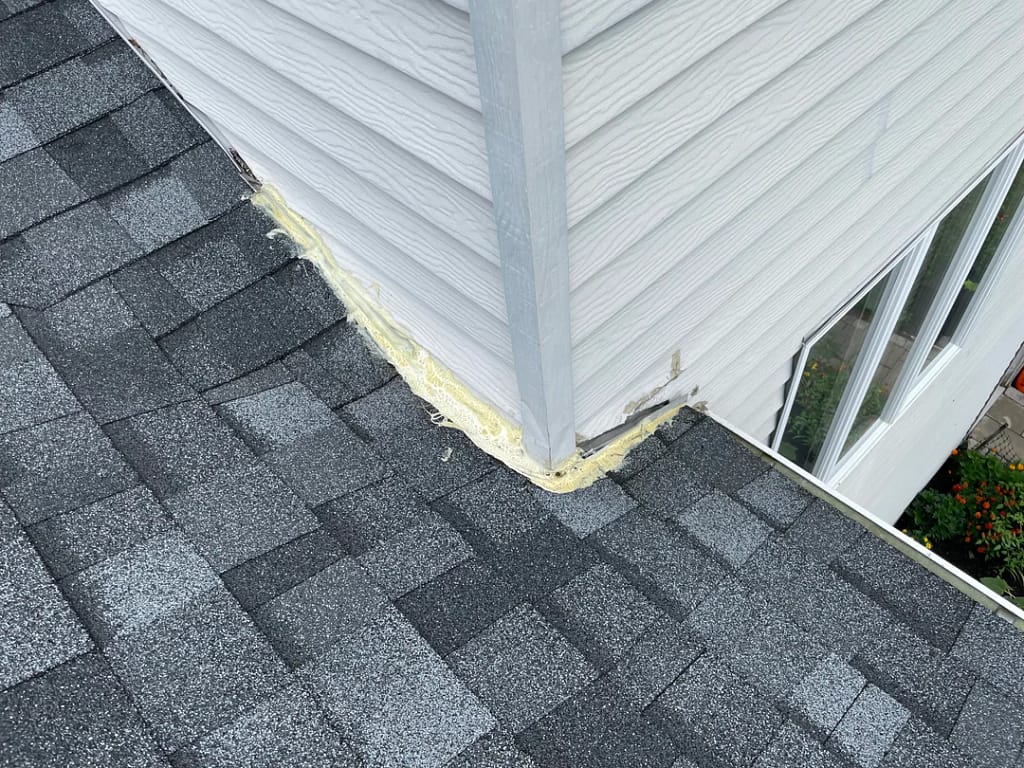
It’s one of the most overlooked failure points in residential roofing. Here’s everything homeowners need to know about this hidden water trap — and how to solve it before the damage spreads.
What Is a Roof Dead Valley?
A dead valley (sometimes called a “flat valley” or “zero-slope valley”) is a section of a roof where two roof planes meet and form a valley — but instead of sloping away to allow water to drain, the junction is essentially flat or nearly so. Water that flows into this area has nowhere to go. It pools, sits, and — over time — finds its way through whatever material lies beneath it.
On a typical valley, water races down the channel and off the edge of the roof. On a dead valley, water stagnates. It may sit for hours or even days after a rain event, giving it every opportunity to seep through cracked caulk, deteriorated flashing, or loose shingles.
“A dead valley doesn’t fail dramatically — it fails slowly and quietly, often for years before the damage becomes visible inside the home.”
Dead valleys are most commonly found where a dormer meets the main roof, where an addition was built onto an existing structure, or where two wings of a complex roofline converge at an unexpectedly shallow angle. They’re essentially a consequence of architectural complexity meeting the laws of gravity.
Warning Signs You Have One
Dead valleys are often invisible until their consequences aren’t. If your home shows any of the following, a dead valley may be the culprit:
💧Interior Water Stains
Brown or yellowish ceiling stains near a dormer, addition, or complex roof junction.
🍂 Debris Accumulation
Leaves, pine needles, and granules collecting in a valley and not washing away.
🌿 Moss or Algae Growth
Green or black biological growth in a specific valley — a sure sign of chronic moisture.
🏚 Soft or Spongy Decking
If a roofer finds soft spots near the valley, the sheathing beneath may already be rotting.
🔍 Visible Gaps in Flashing
Lifted, cracked, or separated metal flashing along the valley line during a visual inspection.
🌧 Leaks During Heavy Rain Only
Leaks that appear only in downpours suggest ponding — water piling up faster than it can drain.
Why Dead Valleys Are So Destructive
Standard asphalt shingles are not designed to sit in standing water. They’re engineered for drainage — water is supposed to move across them and off the roof quickly. Prolonged exposure to ponded water causes shingles to curl, crack, and lose their granule coating at an accelerated rate.
Worse, water that sits long enough will work through the smallest imperfection: a nail hole, a hairline crack in the sealant, a slightly lifted tab. Once it gets beneath the shingles, it saturates the underlayment, penetrates the roof decking (sheathing), and eventually drips into your attic insulation and ceiling structure.
Rot and mold can develop in these areas for months or even years before you notice a stain on your ceiling — by which point, the structural damage may be extensive.
⚠ Important: Dead valleys that drain onto a flat or low-slope roof section are especially high-risk. Water discharged from a steep valley that lands on a flat membrane and pools there creates a compounding problem — two separate failure modes in sequence.
How to Fix a Roof Dead Valley
There is no single fix — the right solution depends on how flat the valley is, how much water volume it receives, and the condition of the existing materials. Here are the four primary approaches, from least to most invasive:
- Install a Self-Adhering Ice-and-Water Shield: For mild dead valleys where the slope is slightly low but not zero, a properly installed self-adhering waterproof membrane (ice-and-water shield) run the full length of the valley provides a robust secondary barrier. This is often combined with open-cut metal valley flashing on top. It won’t fix pooling, but it dramatically reduces leak risk.
- Build Up a Cricket or Saddle: A cricket (also called a saddle) is a small peaked structure built into the roof to redirect water away from a dead zone. Roofers frame it with wood, sheathe it, and shingle it to match the roof. This is the gold-standard fix for dead valleys behind chimneys or at dormer bases — it literally re-routes the water before it can pool.
- Install a Internal Gutter or Collector Box: Where a dead valley receives high water volume, a concealed internal gutter — essentially a trough of sheet metal soldered or sealed at the joints — can be installed directly in the valley. It collects water and channels it to a downspout. This is a common solution in commercial and high-end residential roofing where crickets aren’t architecturally feasible.
- Re-Frame the Roof Structure: For severe cases where ponding is chronic and the roof geometry genuinely cannot drain, the only lasting fix is structural. A carpenter or structural engineer re-frames the problematic area to create adequate slope — typically a minimum of 2:12 (2 inches of rise per 12 inches of run) for standard shingles. This is costly but eliminates the problem at its source.
Ongoing Maintenance Tips
Even a well-repaired dead valley demands more attention than the rest of your roof. Work these habits into your annual home maintenance routine:
Clean the valley twice a year. Debris dams accelerate ponding. In fall and spring, clear leaves, twigs, and granule buildup from every valley — especially any that you know run flat.
Inspect flashing after severe weather. High winds can lift metal flashing slightly, breaking the seal. A quick visual from the ground (or a safe ladder position at the eave) after major storms can catch problems early.
Check attic humidity seasonally. Elevated humidity in your attic — even without a visible ceiling stain — can indicate slow, chronic leakage. A simple humidity gauge and periodic visual checks of the roof decking from below are worthwhile habits.
Budget for professional inspection every 3–5 years. A qualified roofer can spot flashing fatigue, granule loss, and sealant failure in valleys before they become leaks. The cost of an inspection is tiny compared to the cost of decking replacement and interior remediation.
When to Call a Professional
If you’ve found active interior leaks, visible wood rot, or a valley that clearly holds standing water after rain, this is not a DIY project. Working at roof height on a wet surface is dangerous, and an improperly repaired dead valley — with a pinhole gap in flashing or a missed patch in the membrane — will simply continue to leak, hidden from view until the damage compounds.
When hiring a roofer, ask specifically whether they have experience with valley flashing and crickets. Request that they explain where the water is currently going, and where it will go after the repair. A contractor who can answer that clearly understands the problem. One who simply plans to “re-shingle the area” probably doesn’t.
“The question to ask any roofer: ‘Where does the water go?’ If they can’t answer it for every part of the repair, keep looking.”
A dead valley, caught early and repaired correctly, is a manageable problem. Left unaddressed, it becomes one of the most expensive failure points in the entire building envelope. The water always wins — the only question is when, and how much damage it causes on the way through. Get a Free Detailed Inspection from Roof Ohio, and we can properly diagnose and remedy the issue.