If you’ve ever gotten multiple roofing quotes and noticed a price difference, here’s one of the biggest reasons why: the underlayment hiding beneath your shingles.
Most homeowners never think about underlayment. It’s invisible once the job is done, which is exactly why some contractors cut corners on it. At Roof Ohio, we’ve made a firm commitment to using synthetic underlayment on every single job, no exceptions. Here’s why that decision matters more than you might think.
What Is Roof Underlayment, Anyway?
Before we compare materials, let’s set the stage. Roof underlayment is a protective layer installed directly on your roof deck (the plywood or OSB sheathing) before the shingles go on. Think of it as your roof’s insurance policy — if wind-driven rain gets under a shingle, or if shingles are damaged in a storm, the underlayment is the last line of defense keeping water out of your home.
There are two main types: felt (also called tar paper) and synthetic. They look similar from a distance, but they perform worlds apart.
Felt Underlayment: The Old Standard
Felt underlayment — commonly called #15 or #30 felt, or just “tar paper” — has been used in roofing for over a century. It’s made from a base of natural or recycled paper or fiberglass, saturated with asphalt.
The Problems with Felt
It absorbs moisture. This is felt’s fatal flaw. When exposed to rain or humidity during installation, felt can absorb water, wrinkle, and buckle. Those wrinkles can telegraph through the shingles and create an uneven surface — or worse, trap moisture against your roof deck and invite rot.
It tears easily. Walk on it, hit it with a gust of wind, and felt can rip. This creates gaps in protection before the shingles ever go on.
Short exposure window. Most felt underlayments are only rated for 1–2 weeks of weather exposure. If a roofing project gets delayed — and weather delays happen — felt-covered decks are at risk.
It’s heavier and harder to work with. Felt rolls are bulky and can be cumbersome in heat, becoming brittle in cold. That affects installation quality.
It’s cheap — and it shows. Felt is significantly less expensive than synthetic, which is why budget-focused contractors use it. It pads their margins without you ever knowing.
Synthetic Underlayment: Built for the Modern Roof
Synthetic underlayment is made from woven or spun polypropylene or polyethylene — essentially, engineered plastic materials designed specifically for roofing performance.
Why Synthetic Wins
Superior moisture resistance. Synthetic underlayment is highly water-resistant and won’t absorb moisture. Even if it gets rained on mid-installation, it sheds water rather than soaking it up.
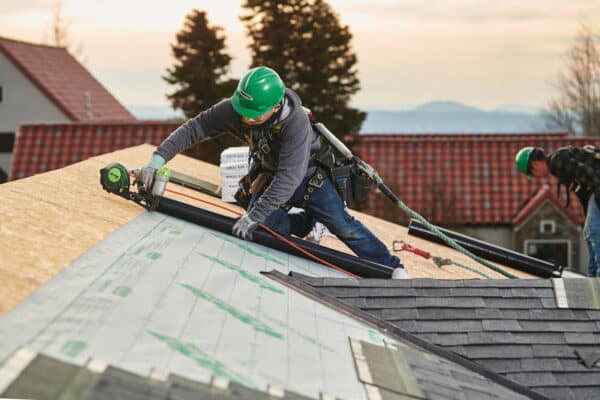
Dramatically stronger. Synthetic is much harder to tear. It holds up to foot traffic during installation, staples and nails without ripping, and resists wind uplift far better than felt.
Longer exposure ratings. Quality synthetic underlayments can be left exposed for 6 months or more without degrading. That means your roof deck stays protected even if the project is delayed.
Lighter weight. Synthetic rolls are lighter, making them easier to carry up a ladder and faster to install — which also translates to better, more careful workmanship on the roof.
Better slip resistance. Many synthetic products have textured surfaces specifically designed for installer safety. Felt can be dangerously slick, especially when wet.
UV stability. The sun is brutal on roofing materials. Synthetic underlayments are engineered to resist UV degradation far longer than felt.
What This Means for You
When a roofing company uses felt underlayment, they’re making a trade-off that saves them money at the expense of your home’s protection. It’s not always a sign of bad intentions — felt has been used for decades — but in 2024, with better materials readily available, there’s simply no good reason to use it on a new or replacement roof.
At Roof Ohio, we believe the underlayment is too important to compromise on. You’re making a 20–30 year investment in your roof. The few dollars saved per square foot on cheap felt isn’t worth the risk of a prematurely failing roof system, moisture damage to your deck, or callbacks down the road.
When you hire us, synthetic underlayment is standard — not an upgrade. Every time.
Ask Your Contractor This One Question
Before you sign any roofing contract, ask: “What underlayment will you be using, and what’s its exposure rating?”
If they can’t answer confidently, or if they say felt, you now know exactly what that means for the longevity of your roof.
We’re happy to answer that question, and any others, before you ever commit to a job. Reach out today for a free inspection and honest estimate.