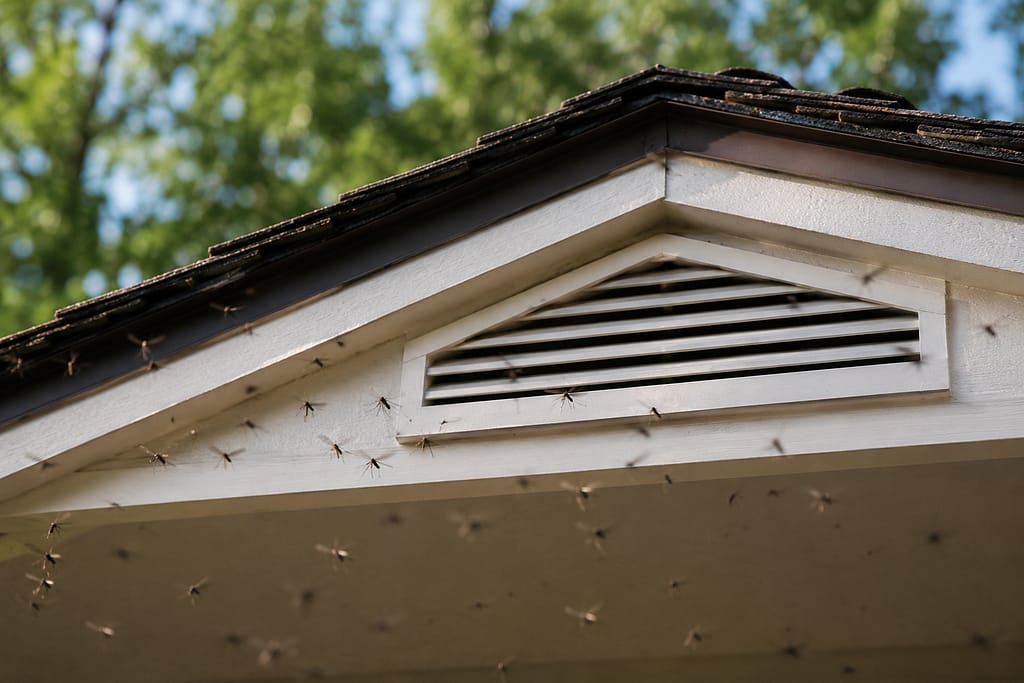
If you’ve ever dealt with a swarm of ladybugs on your siding in October, a wasp nest tucked under your soffit, or the unmistakable sound of something scurrying around above your ceiling, there’s a good chance your attic ventilation is part of the story. Most homeowners think of attic vents as a way to manage heat and moisture — and they are — but a well-designed, properly sealed ventilation system also happens to be one of your home’s best defenses against unwanted pests.
Here in Central Ohio, where we swing from humid summers to damp falls to cold, condensation-prone winters, attics take on a lot of stress. That stress creates the kind of gaps, soft wood, and trapped moisture that bugs (and sometimes rodents) love to exploit.
The Connection Between Ventilation and Pest Problems
Attic ventilation is supposed to be a controlled system: intake vents at the eaves or soffits pull in fresh air, and exhaust vents at or near the ridge let hot, moist air escape. When that system is balanced and sealed correctly, air moves through purpose-built vents — not through random cracks, gaps, and openings that pests can also use.
Problems start when ventilation is poorly designed, damaged, or blocked. A few common scenarios we see on roofs across Dublin, Powell, and Westerville:
- Gaps around vent covers or boots that were never properly flashed or sealed, giving insects a direct entry point.
- Soffit vents blocked by insulation, which forces moisture to linger in the attic and soften the wood around the eaves — a magnet for carpenter ants and wood-boring insects.
- Damaged or missing vent screens, which turn an intake or exhaust vent into an open door for wasps, bees, mice, squirrels, and bats.
- Excess attic moisture from poor airflow, which attracts pests that are drawn to damp wood, mold, and the insects that feed on it.
In other words, ventilation issues rarely just cause heat and humidity problems in isolation. They tend to show up as pest problems too, because the same gaps that let air escape unpredictably also let bugs in.
Why This Matters More in Ohio Than You’d Think
Ohio’s climate is part of what makes this a bigger issue here than in more temperate regions. During our humid summer months, attics without adequate airflow trap moisture, which softens wood fascia and sheathing over time. Once wood starts to soften, it becomes far more attractive to insects looking for a place to nest or feed.
Then in fall, homeowners across Gahanna, New Albany, and Pickerington deal with the annual invasion of overwintering pests — ladybugs, boxelder bugs, and stink bugs — all searching for small gaps to squeeze into before the cold sets in. A tight, well-sealed ventilation system with intact screens and flashing gives them far fewer options. A neglected one is basically an invitation.
Signs Your Attic Ventilation Might Be Inviting Pests In
You don’t need to climb into your attic to spot warning signs. Keep an eye out for:
- Ladybugs, boxelder bugs, or stink bugs clustering near your roofline or soffits in fall
- Wasp or bee activity around vent openings
- Scratching or scurrying sounds near the roofline, especially at dusk
- Visible daylight around vent boots or ridge vents from inside the attic
- Soft, discolored, or stained wood near soffits and eaves
- A musty smell in the attic, which often points to trapped moisture
If any of these sound familiar, it’s worth having your ventilation system inspected before a minor gap turns into a bigger repair — or a full-blown pest problem.
What Proper Attic Ventilation Looks Like
A correctly ventilated attic isn’t just “more vents.” It’s a balanced system where:
- Intake and exhaust are properly matched. Soffit vents bring in air, and ridge or exhaust vents let it out. If one side is blocked or undersized, the whole system underperforms.
- Every penetration is sealed and flashed correctly. Pipe boots, vent covers, and any other roof penetration should have tight, weatherproof seals — not gaps a wasp could fly through.
- Vent screens are intact. Small mesh screens on vents keep insects and small animals out without restricting airflow.
- Insulation doesn’t block soffit vents. This is one of the most common issues we find during inspections, and it’s an easy fix with the right baffles.
When these pieces are in place, your attic does its job — regulating temperature and moisture — while staying sealed against the pests trying to get inside.
The Bigger Picture: Ventilation Protects More Than Comfort
Good attic ventilation extends the life of your shingles, prevents ice damming in winter, reduces cooling costs in summer, and helps prevent mold and wood rot. Keeping pests out is really just one more benefit of a system that’s doing its job correctly. When ventilation fails, it tends to fail on all these fronts at once — which is why it’s worth addressing sooner rather than later.
If you’re noticing pest activity near your roofline, unusual attic smells, or you’re just not sure whether your current ventilation setup is doing its job, it’s worth having a professional take a look. A thorough roof inspection can catch these issues before they turn into bigger repairs — or invite more than just insects into your home.