
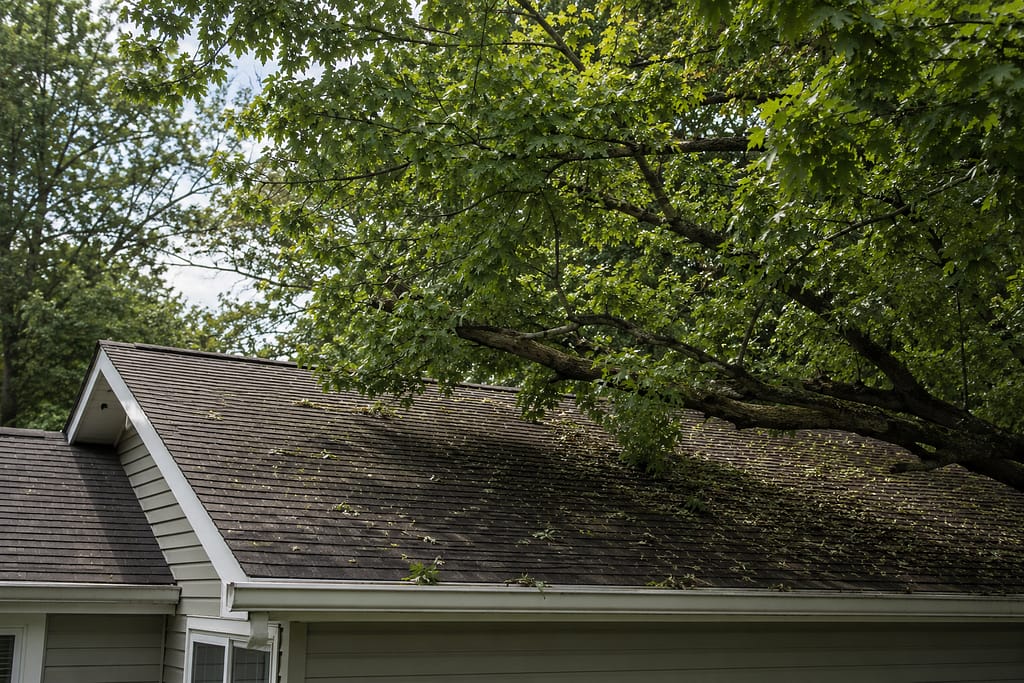
There’s a lot to love about a mature tree in your backyard. It shades your patio in July, adds curb appeal, and gives the kids something to climb. But if you live anywhere in Westerville, Dublin, Powell, Gahanna, New Albany, Hilliard, Pickerington, Grove City, or Canal Winchester, that same tree could be quietly costing you thousands in roof repairs down the road.
Central Ohio’s mix of mature oak and maple canopies, sudden summer storms, and heavy winter snow loads makes tree-roof interactions one of the most common (and most preventable) causes of roof damage we see. Here’s what homeowners should know.
1. Overhanging Branches Do More Damage Than You’d Think
A branch that looks harmless on a calm day becomes a problem the moment wind picks up. Even without a full storm, branches that brush against shingles during breezy weather slowly wear away the granule coating that protects your shingles from UV damage and moisture. Over months and years, this creates thin spots where leaks eventually start.
What to look for: Branches within 6-10 feet of your roofline, or any limb that visibly sways and makes contact with the roof surface during wind.
2. Falling Limbs and Storm Damage
Ohio gets its fair share of severe thunderstorms and high-wind events, especially in late spring and summer. Weakened or dead branches are the first thing to come down, and when they land on a roof, the damage isn’t always obvious from the ground. A branch strike can crack shingles, dent metal panels, or even puncture decking without leaving a hole you’d notice from the driveway.
This is exactly why we recommend a professional roof inspection (not just a quick look with binoculars) after any significant storm. An inspection catches impact damage, loosened shingles, and soft spots before they turn into interior leaks.
3. Leaves and Debris Clogging Your Gutters
Trees don’t have to touch your roof to cause problems. Falling leaves, seed pods, and small branches collect in gutters and valleys, blocking proper water flow. When gutters back up, water has nowhere to go except under the shingles or over the fascia, which leads to rot, ice dams in winter, and even foundation issues from water pooling near the house.
If you’re dealing with gutters that overflow every fall, our team has written more on gutter drainage and maintenance to help you get ahead of it before winter.
4. Shade, Moisture, and Algae Growth
A heavily shaded roof stays damp longer after rain, which creates ideal conditions for algae and moss growth, especially on the north-facing slopes that get the least sun. Beyond the black streaking that hurts curb appeal, sustained moisture retention can shorten the lifespan of your shingles.
Algae-resistant shingles help, but pairing them with proper tree trimming to let light and airflow reach the roof surface makes a bigger difference long term.
5. Root Systems and Structural Movement
This one surprises a lot of homeowners: large trees planted too close to a house can affect the foundation and, in turn, put uneven stress on the structure supporting your roofline. It’s not the most common issue we see, but it’s worth knowing about if you have a large, mature tree within 15-20 feet of your foundation.
What Central Ohio Homeowners Can Do
- Trim back branches so nothing overhangs or touches the roof, ideally keeping a few feet of clearance.
- Clean gutters at least twice a year, more often if you have heavy tree cover.
- Schedule a roof inspection after major storms or at least once a year, particularly if mature trees surround your property.
- Watch for granule buildup in gutters or downspouts, which often signals branch-related wear on your shingles.
When to Call a Professional
If a storm has knocked branches onto your roof, or if you’ve noticed granules collecting in your gutters, it’s worth having a professional set of eyes on it before a small issue becomes a bigger one. At Roof Ohio, we offer thorough roof inspections (not just quick estimates) so you know exactly what’s going on up there, whether it’s tree-related wear, storm impact, or something else entirely.