If you live in Ohio, you already know: the weather doesn’t play nice.
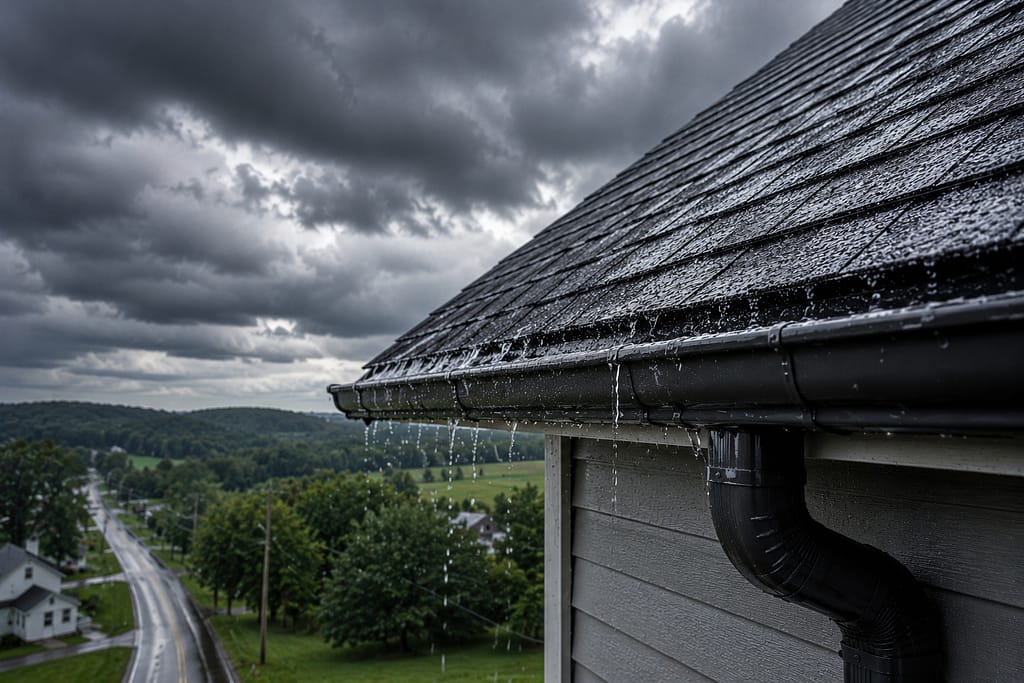
From spring thunderstorms rolling off Lake Erie to late-season ice storms that snap branches and pile ice dams along your roofline, Ohio homeowners face one of the most demanding combinations of weather conditions in the country. Your gutters — those humble troughs most people never think about — are working overtime to protect your foundation, siding, and landscaping from thousands of gallons of water every year.
So when it’s time to replace or upgrade, the question isn’t just “what’s cheapest?” It’s “what can actually handle what Ohio throws at it?”
Here’s a breakdown of the best gutter options for storm-prone regions, and what to look for when you’re making your decision.
Why Ohio Weather Demands More From Your Gutters
Ohio sits in a unique meteorological crossroads. We get:
- Heavy summer thunderstorms capable of dropping 2+ inches of rain in under an hour
- Freeze-thaw cycles throughout winter and early spring that crack and warp inferior materials
- Ice damming along roof edges that can rip lightweight gutters clean off
- Wind-driven debris from deciduous trees that clog standard gutters fast
A gutter system that performs fine in Arizona will fail here within a few seasons. You need something built for volume, temperature swings, and physical stress.
The Best Gutter Materials for Storm Country
1. Seamless Aluminum — The Smart Standard
Aluminum is the most popular gutter material in storm-prone climates for good reason. It’s lightweight, rust-proof, and when installed as a seamless system (formed on-site from a continuous roll), it eliminates the joints where most leaks begin.
Why it works in Ohio:
- Won’t rust from our wet winters
- Handles freeze-thaw cycles without cracking
- Available in heavier gauges (0.032″ or 0.040″) for extra strength against ice load
- Seamless design means no weak points during heavy downpours
One thing to know: Aluminum can dent under impact — think heavy ice chunks or a falling branch. Going with the thicker 0.040″ gauge is worth the modest price increase if you have large overhanging trees.
2. Steel Gutters — Maximum Muscle
If you want the strongest off-the-shelf gutter option, galvanized or stainless steel delivers. Steel is significantly heavier and more impact-resistant than aluminum, making it an excellent choice for properties with mature trees or areas that see particularly brutal ice storms.
Why it works in Ohio:
- Exceptional strength-to-weight ratio
- Resists denting from branches, hail, and ice
- Can support the weight of snow and ice accumulation better than lighter materials
One thing to know: Galvanized steel can rust over time, especially at cut edges or seams. Stainless steel sidesteps this but comes at a higher cost. Regular inspection and touch-up paint on galvanized systems will dramatically extend their life.
3. Copper Gutters — The Long-Term Investment
Copper is the luxury option, and for certain homes — especially older, historic, or high-end properties — it’s the right call. Copper never rusts, develops a beautiful patina over time, and with proper installation can last 50 years or more.
Why it works in Ohio:
- Extremely durable through freeze-thaw cycling
- Naturally antimicrobial (resists moss and algae buildup)
- Adds significant curb appeal and home value
One thing to know: The upfront cost is substantially higher than aluminum or steel. It’s not the right fit for every budget, but if you’re planning to stay in your home long-term and want a gutter system you’ll never have to replace again, the math can work out.
What Size Gutters Do You Need?
Standard 4″ gutters are not enough for Ohio storms. Period.
Most homes in storm-prone regions should be using 5″ K-style gutters at minimum. For larger roof surfaces, steeper pitches, or areas with heavy tree cover, 6″ gutters may be appropriate. The increased capacity means water moves through and away from your home before it has a chance to overflow and damage your fascia, siding, or foundation.
Downspout sizing matters too. A 3″x4″ rectangular downspout moves significantly more water than the older round 2″ style — and in a heavy Ohio thunderstorm, every inch of capacity counts.
Don’t Skip: Gutter Guards for Ohio Conditions
Ohio’s tree canopy is gorgeous. It’s also a gutter nightmare.
Leaves, seed pods, helicopter seeds from maples, pine needles — they all end up in your gutters, and a clogged gutter in a downpour is as useless as no gutter at all. Worse, saturated debris holds moisture against your fascia and becomes a breeding ground for rot.
Micro-mesh gutter guards are the gold standard for Ohio homes. Unlike cheap foam inserts or basic screens that let in small debris, micro-mesh keeps out everything down to pine needles and shingle grit, while still allowing water to flow freely. They also prevent ice from forming inside the gutter — a real concern during Ohio winters.
A quality gutter guard system will pay for itself in avoided cleanings, extended gutter life, and prevented water damage.
Installation Matters as Much as the Product
The best gutter in the world fails if it’s installed wrong. A few things that separate a quality installation from a subpar one:
Proper pitch: Gutters need to slope toward downspouts at roughly 1/4 inch per 10 feet. Too flat and water pools; too steep and it’s visible and looks unprofessional.
Correct hanger spacing: In snow and ice country, hangers should be spaced every 18–24 inches (not the 36″ you sometimes see in warmer climates). Tighter spacing means the gutter can support the weight of ice without pulling away from the fascia.
Downspout placement and extension: Downspouts need to direct water at least 4–6 feet away from your foundation. Extensions and proper grading aren’t glamorous, but they’re what actually protects your basement.
Fascia board condition: No gutter installation lasts if it’s attached to rotted wood. A reputable installer will identify and address any fascia damage before hanging new gutters.
The Bottom Line for Ohio Homeowners
When it comes to gutters in a storm-prone state like Ohio, you’re not just buying a product — you’re buying protection for your home’s foundation, structure, and landscaping. Cutting corners on gauge, size, or installation quality means paying twice: once for the cheap system, and again when you’re dealing with basement flooding, rotted fascia, or erosion around your foundation.
Our recommendation for most Ohio homes: seamless aluminum in 0.040″ gauge, 5″ or 6″ K-style, with a quality micro-mesh guard system — installed by professionals who know Ohio winters.
Ready to talk about what your home specifically needs? Every roofline is different, and we’re happy to take a look and give you an honest assessment.