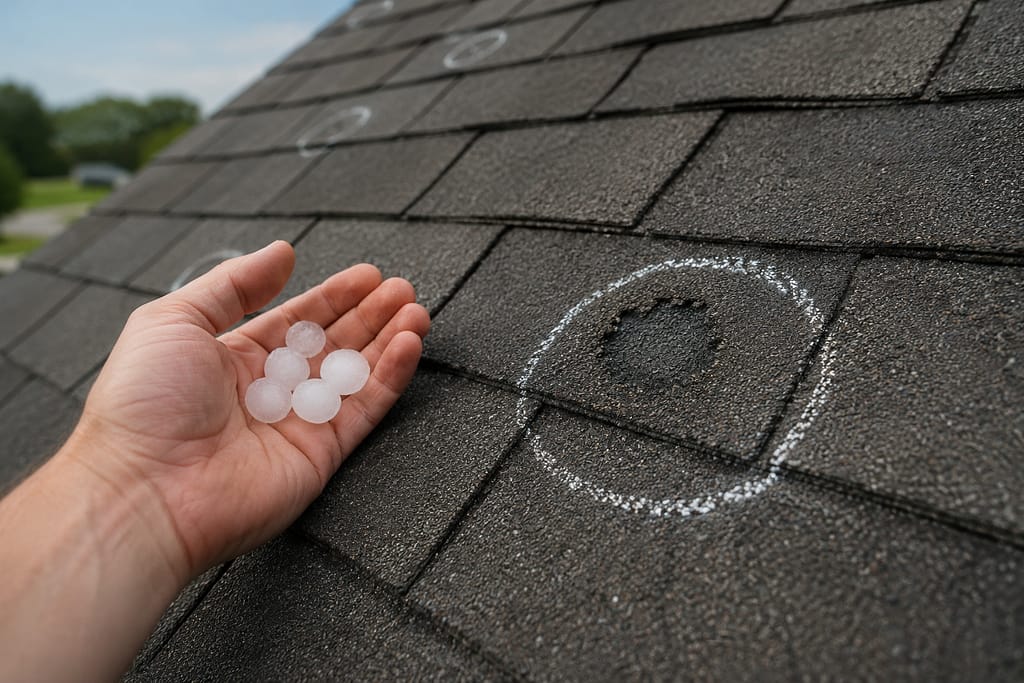
When a hailstorm rolls through or a branch comes crashing down, your roof is the only thing standing between the storm and everything inside your home. But not all shingles are created equal — and understanding impact ratings could be the difference between a roof that survives for decades and one that needs replacing after a single bad storm.
What Is an Impact Rating?
Impact ratings are standardized performance grades that tell you how well a roofing shingle can withstand physical blows — primarily from hail, but also from wind-driven debris. These ratings come from third-party testing laboratories and give homeowners, contractors, and insurance companies a common language for comparing shingle durability.
The most widely used rating system in North America is UL 2218, developed by Underwriters Laboratories. Shingles are tested by firing steel balls of varying sizes at them from a standardized height and measuring the resulting damage. The results produce a Class 1 through Class 4 rating.
The UL 2218 Class System Explained
Class 1 — Entry Level
Steel balls 1.25 inches in diameter are dropped twice on the same spot from 12 feet. Class 1 shingles are the baseline — they offer minimal impact resistance and are typically found on budget roofing products. Not recommended for areas with frequent severe weather.
Class 2 — Moderate Resistance
The test ball increases to 1.5 inches, dropped from 15 feet. Class 2 shingles perform better but still aren’t considered impact-resistant in a meaningful way for storm-prone regions.
Class 3 — Good Resistance
A 1.75-inch steel ball dropped from 17 feet. Class 3 shingles are a solid middle ground — suitable for most residential applications and often available at a reasonable price premium over basic shingles.
Class 4 — Maximum Resistance
The highest rating: a 2-inch steel ball dropped from 20 feet, twice on the same point. Class 4 shingles show no cracking, splitting, or fracturing after impact. This is the gold standard for impact resistance and the rating you want if you live in hail country or an area prone to falling debris.
Why Class 4 Matters (and Pays for Itself)
Class 4 impact-resistant shingles typically cost 10–30% more than standard shingles upfront. However, many homeowners find that this premium pays for itself quickly — and then some — for a few reasons:
Insurance Discounts Many homeowners insurance companies offer significant premium discounts for Class 4 rated roofs — often ranging from 20% to 30% off the wind and hail portion of your policy. Depending on your location and insurer, the annual savings can offset the cost difference within just a few years.
Fewer Claims and Deductibles Even with insurance, filing claims comes with deductibles and the potential for rate increases. A roof that survives a storm without damage means no claim, no deductible, and no disruption.
Longer Lifespan Impact-resistant shingles are generally more durable overall — not just against hail, but also against UV degradation, cracking, and general wear. Many carry 30- to 50-year warranties.
Increased Resale Value A Class 4 rated roof is a selling point. Buyers in storm-prone regions actively look for this feature.
The FM 4473 Standard: An Alternative Rating
While UL 2218 is the most common standard, you may also encounter FM 4473, used by Factory Mutual (FM Global). FM 4473 uses ice balls rather than steel balls to more realistically simulate hail, and it also uses a Class 1–4 scale.
FM 4473 is generally considered a more rigorous test because ice balls fracture on impact more like real hail, whereas steel balls are essentially indestructible. A shingle rated Class 4 under FM 4473 has demonstrated exceptional performance under realistic conditions.
If you’re choosing between two products both claiming Class 4 status, checking which standard they were tested to can be worth the extra research.
Not Just About Hail: Other Types of Impact Damage
When most people think of roof impacts, they think of hailstorms. But impact resistance matters in other scenarios too:
- Falling branches and debris during high-wind events
- Foot traffic during installation or maintenance — Class 4 shingles are less prone to cracking underfoot
- Thermal cycling — the repeated expansion and contraction from temperature changes gradually weakens shingles; impact-resistant materials tend to hold up better
- Ice dams — while not a direct impact issue, the added material strength in Class 4 shingles can reduce vulnerability in freeze-thaw cycles
How to Identify Impact-Rated Shingles
When shopping for shingles, look for:
- UL 2218 Class 4 certification label — listed on the product packaging and in the manufacturer’s spec sheet
- FM 4473 Class 4 designation — particularly common on commercial-grade products
- “Impact Resistant” or “IR” notation — many manufacturers use this shorthand in their product names or marketing materials
- Third-party verification — always confirm the rating through the testing body’s database if you’re making a major investment decision
Your roofing contractor should be able to provide documentation of the rating before installation begins.
Who Needs Class 4 the Most?
Impact ratings matter everywhere, but they’re especially critical if you live in:
- “Hail Alley” — the corridor stretching from Texas through Nebraska and Colorado, where large hail events are frequent
- The Great Plains and Midwest — high incidence of severe thunderstorm activity
- Mountain regions — where debris, heavy snowfall, and ice can stress roofing materials year-round
- Coastal areas — where wind-driven rain and debris are a regular occurrence
Even outside these regions, the premium for impact-resistant shingles is modest enough that most homeowners in single-family homes should at least consider it when replacing their roof.
Questions to Ask Your Contractor
Before signing any roofing contract, ask:
- What is the UL 2218 or FM 4473 rating of the shingles you’re recommending?
- Can you show me the manufacturer’s certification documentation?
- Does my insurance company offer a discount for Class 4 shingles, and can you help me document the installation for that discount?
- What warranty comes with these shingles, and does it cover hail damage?
A good contractor will welcome these questions. If someone seems put off by them, that’s a signal to look elsewhere.
The Bottom Line
Impact ratings aren’t marketing jargon — they’re a measurable, independently verified indicator of how well your roof will perform when the weather turns ugly. For most homeowners, the modest upfront cost of Class 4 rated shingles is one of the smartest investments you can make in your home’s long-term resilience and your wallet’s long-term health.
The next time a hailstorm moves through the neighborhood, you’ll know whether your roof is ready.