Snow is deceptively heavy. A single cubic foot of wet, packed snow can weigh 20 pounds or more, and a full season’s accumulation puts enormous stress on any roof. Add in freeze-thaw cycles, ice dams, and sub-zero temperatures that make some materials brittle, and it becomes clear that choosing the right roofing material in a snowy climate isn’t just an aesthetic decision — it’s a structural and safety one.
Here’s what you need to know before you reroof.
What Makes a Roof “Snow-Ready”?
Before diving into materials, it helps to understand what properties matter most in cold climates:
Slope compatibility. Steeper pitches (6:12 and above) shed snow more easily and reduce the risk of ice dams. Your material choice should suit your roof’s pitch.
Weight tolerance. Some materials are heavier than others. Your roof structure needs to handle both the material’s own weight and whatever snow load your region sees.
Thermal performance. Materials that stay cold on the outside (rather than transferring heat from inside) help snow slide off naturally and reduce ice dam formation.
Durability through freeze-thaw cycles. Water that infiltrates tiny cracks expands when it freezes, turning small problems into big ones fast.
The Top Roofing Materials for Snowy Climates
1. Metal Roofing — The Gold Standard
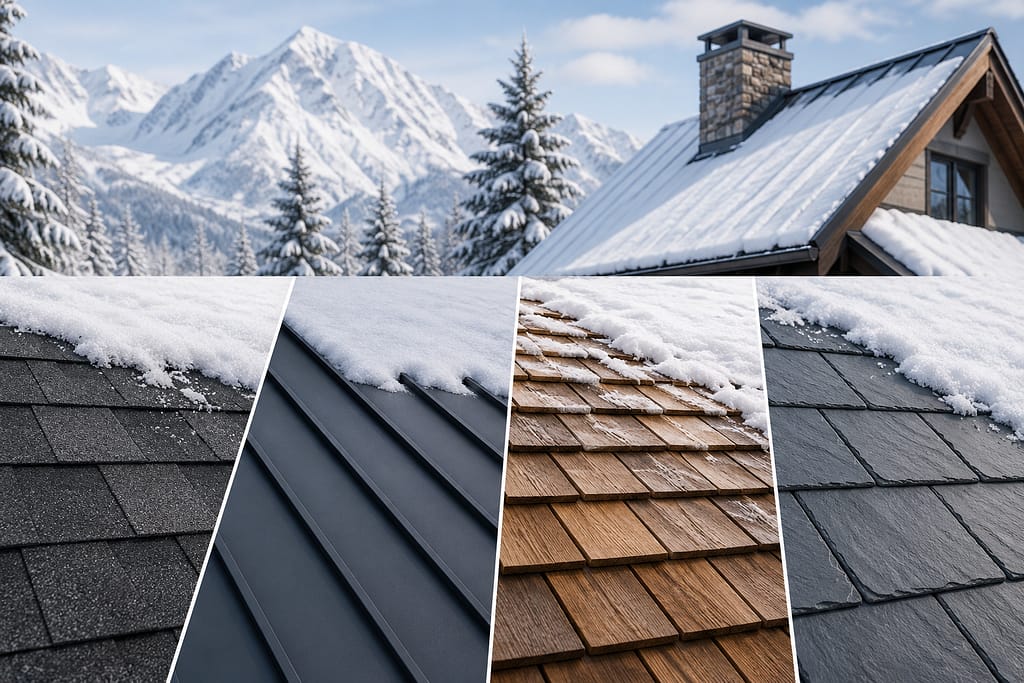
If you only remember one material from this post, make it metal. Standing seam metal roofing is widely considered the best option for snowy regions, and for good reason.
Snow sheds from metal’s smooth surface almost effortlessly, which dramatically reduces ice dam risk and the structural load on your home. Metal is also exceptionally durable — a quality metal roof can last 50 years or more — and it handles freeze-thaw cycles without cracking or absorbing moisture.
Best types for snow country:
- Standing seam steel or aluminum — the benchmark choice. Concealed fasteners eliminate leak points, and the raised seams channel water and snowmelt away cleanly.
- Metal shingles — offer the look of traditional shingles with most of the performance benefits of standing seam.
One caveat: Metal roofs can release snow very suddenly and in large sheets. If your home has walkways, entryways, or decks below the roofline, install snow guards to break up the slide and protect people and property below.
2. Asphalt Shingles — The Practical Workhorse
Asphalt shingles are the most common roofing material in North America, and they hold up reasonably well in snowy climates when properly installed — though they’re not without limitations.
The key is choosing architectural (laminate) shingles rather than basic three-tab shingles. Architectural shingles are thicker, heavier, and more resistant to the wind and impact that often accompany winter storms. Look for products rated for high-wind and impact resistance, and pay attention to the temperature rating — some shingles become brittle below certain thresholds.
What makes asphalt work in snow country:
- Relatively affordable and widely available
- Easy to repair or replace damaged sections
- Work well on moderate to steep pitches
- Ice-and-water shield underlayment (installed at the eaves) is critical to prevent ice dam damage
The limitation: Asphalt is porous and can absorb moisture over time, which freeze-thaw cycles exploit. Expect a lifespan of 20–30 years in cold climates, compared to 30+ in milder regions.
3. Slate Roofing — A Lifetime Investment
Natural slate is one of the oldest and most durable roofing materials in existence, and its performance in cold, wet climates is legendary. Many slate roofs in New England and Europe have survived intact for well over a century.
Slate is completely impervious to moisture, immune to freeze-thaw damage, and naturally heavy enough to stay put in high winds. It’s also fire-resistant and low-maintenance once installed.
If your home can handle the weight and your budget allows it, slate is a genuinely excellent long-term choice — especially for steeper-pitched roofs.
Synthetic slate offers a compelling middle ground: engineered to mimic the look of natural slate, it’s significantly lighter, less expensive, and still quite durable in cold climates.
4. Cedar Shake and Wood Shingles — Classic, With Caveats
Cedar shake has a natural rustic appeal, and untreated cedar does have some useful properties: it’s a natural insulator and, when properly maintained, handles moisture reasonably well. In dry mountain climates, wood shingles can perform admirably.
However, wood requires considerably more maintenance than other materials, is susceptible to moss and mold in wet snowy climates, and most municipalities now restrict or prohibit wood roofing due to fire risk. If you love the look, synthetic alternatives that mimic cedar shake are worth considering — they offer similar aesthetics with far better durability and fire resistance.
5. Concrete and Clay Tile — With Important Reservations
Clay and concrete tiles are popular in the Southwest and Mediterranean climates, but they’re a problematic choice for heavy snow regions. Traditional clay tiles can crack under freeze-thaw stress, and both materials are extremely heavy — adding significant load to a structure that’s already managing snow weight.
That said, some manufacturers now produce freeze-thaw-resistant concrete tiles specifically rated for northern climates. If you’re drawn to tile for aesthetic reasons, look for products explicitly tested and rated for cold-climate performance, and have a structural engineer assess your home’s load capacity first.
Don’t Overlook: Ice-and-Water Shield and Ventilation
No matter which material you choose, two things dramatically affect how your roof performs in snow country:
Ice-and-water shield. This self-adhering waterproof membrane is installed under your primary roofing material along the eaves and in vulnerable areas like valleys. When ice dams form and water backs up under shingles, the shield prevents it from reaching your decking and interior. Building codes in cold climates typically require it; make sure your contractor installs it correctly.
Attic ventilation. Ice dams — those destructive ridges of ice that form at the eave and cause water to back up under shingles — are largely caused by heat escaping from inside the home, warming the roof deck and melting snow that then refreezes at the cold eaves. Good attic insulation and ventilation keep the roof deck uniformly cold, which reduces ice dam formation regardless of which roofing material you use.
The Bottom Line
For most homeowners in snowy regions, metal roofing offers the best combination of performance, longevity, and low maintenance. If budget is a primary concern, architectural asphalt shingles with proper ice-and-water shield installation are a solid middle-ground choice. For those willing to invest in a roof that may outlast them, natural slate is hard to beat.
Whatever you choose, work with a contractor experienced in cold-climate installation, and don’t cut corners on underlayment, flashing, or ventilation. The material on top gets all the attention, but what’s underneath it often determines how well your roof actually performs when the snow starts to pile up.