Why thousands of homeowners are making the switch to metal — and never looking back.
“When you choose a roof, you’re not choosing for this decade — you’re choosing for the next two or three.”
For most of history, homeowners accepted roofing as a recurring expense — something to be replaced every 15 to 25 years with little to show for it. Asphalt shingles were cheap, familiar, and disposable. But a quiet revolution in residential construction has changed the calculus entirely.
Metal roofing, once reserved for barns and commercial buildings, has become one of the fastest-growing segments in the residential roofing market. And once you understand why, it’s hard to argue against it.
- 50+Year Lifespan
- 40% Energy Savings
- 6% Home Value Boost
- 100% Recyclable
Longevity That Outlasts Everything Else
The average asphalt shingle roof lasts 15–25 years. A properly installed metal roof? Anywhere from 40 to 70 years — with some copper and zinc roofs lasting well over a century. That’s not a small improvement. That’s a generational shift in how we think about the top of our homes.
Consider a homeowner who installs asphalt at age 35. By the time they retire at 65, they’ve likely replaced that roof once, possibly twice. A metal roof installed at the same age may still be performing flawlessly when their grandchildren inherit the property.
- Steel roofs: 40–70 years with minimal maintenance
- Aluminum roofs: 50+ years, especially in coastal climates
- Copper roofs: 100+ years and develop a distinguished patina
- Most manufacturers offer 30–50 year material warranties
Weathering Every Storm — Literally
Metal roofs are engineered to endure what nature throws at them. They’re rated to withstand wind gusts up to 140 mph in most configurations — far exceeding the thresholds that demolish traditional shingles. In hurricane-prone areas, metal roofing isn’t just a preference; in many cases, it’s the only rational choice.
Fire resistance: Metal roofs carry a Class A fire rating — the highest possible. Unlike wood shake or even asphalt, metal doesn’t ignite from airborne embers, making it an invaluable shield in wildfire-prone regions.
Heavy snow and ice loads that crack and cave traditional roofing materials simply slide off a metal roof’s smooth surface. And unlike shingles, metal doesn’t absorb moisture, so freeze-thaw cycles don’t cause progressive structural damage over time.
The best roof is the one you install once — and then forget about for the rest of your life.— A principle shared by roofing professionals across the industry
Energy Efficiency That Pays You Back
One of the most underappreciated qualities of metal roofing is its thermal performance. Metal roofs reflect solar radiant heat rather than absorbing it, which can reduce cooling costs by 10–25% during peak summer months. In warm climates, the energy savings alone can justify a significant portion of the installation cost over time.
Many metal roofing products are also ENERGY STAR® certified, making homeowners eligible for federal tax credits and potentially lower homeowner’s insurance premiums. When you factor in these savings over the roof’s 50-year lifespan, the financial picture becomes compelling.
- Reflects up to 70% of solar energy depending on coating and color
- Cool roof coatings can reduce attic temperatures by 20–30°F
- Compatible with solar panel installation without voiding warranties
- Eligible for ENERGY STAR tax credits in many configurations
A Surprisingly Green Choice
Roofing waste is a genuine environmental problem. Each year, approximately 11 million tons of asphalt shingle waste are deposited in U.S. landfills. When a metal roof reaches the end of its extraordinary life, the material is 100% recyclable — and most metal roofing already contains 25–95% recycled content to begin with.
The lifecycle math is stark. One metal roof replaces three or four asphalt roofs over the same time period — meaning dramatically less material extraction, manufacturing emissions, and disposal waste.
Sustainable building note: Metal roofing often contributes toward LEED certification credits for residential and commercial construction projects, a growing priority in eco-conscious new builds.
Curb Appeal and Home Value
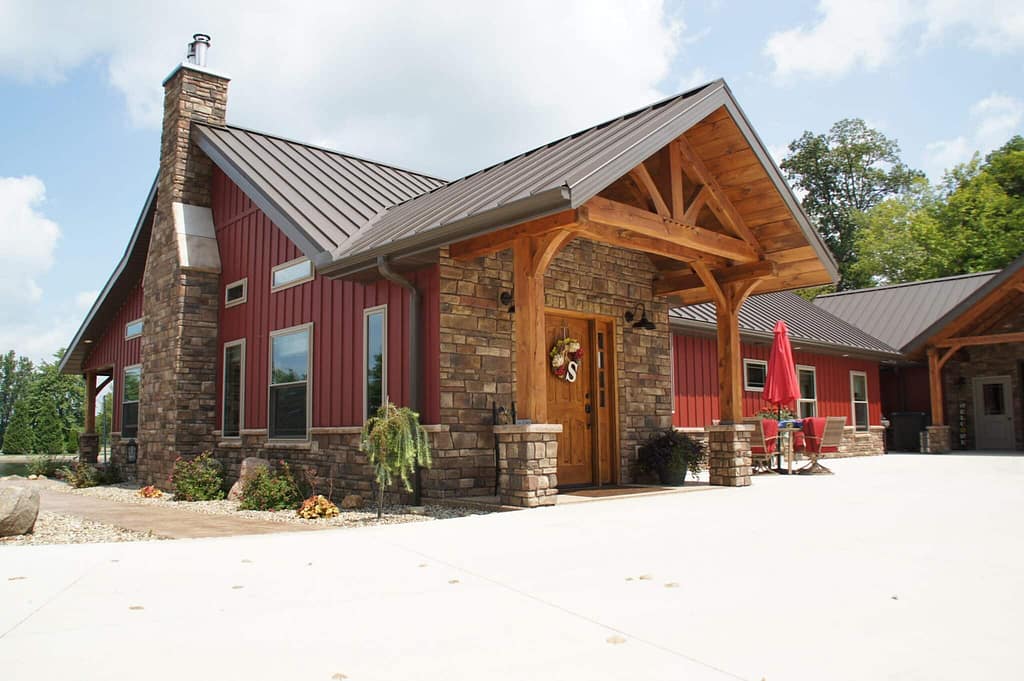
Early metal roofing had an aesthetic reputation problem. Corrugated industrial panels aren’t exactly a neighborhood showstopper. But modern metal roofing has shed that image entirely. Today’s options include standing seam panels, metal tiles that mimic slate or clay, and shake-style profiles that are virtually indistinguishable from wood — until you read about their 50-year warranty.
Available in dozens of colors and finishes, modern metal roofing enhances the architecture of virtually any home style — from craftsman bungalows to contemporary farmhouses to colonial estates. And critically, it holds that appearance. Metal doesn’t moss, mildew, stain, or curl.
- Metal roofs recoup 60–80% of installation cost at resale on average
- Homes with metal roofs sell faster in most markets
- Some insurers offer discounts of 20–30% for metal roofing
- Retains color and profile for decades without significant fading
Low Maintenance, High Peace of Mind
Traditional roofing demands attention. Shingles crack, curl, and go missing after storms. Moss and algae colonize them. Gutters fill with granule runoff. Metal roofing sidesteps most of this entirely. Beyond a periodic visual inspection and clearing debris from valleys and gutters, a well-installed metal roof requires very little intervention.
There are no granules to lose, no tabs to crack, and no organic material for moss to feed on. The result is a roof that lives quietly above your head — doing its job without demanding yours.
The Investment That Makes Itself
Yes, metal roofing costs more upfront. But that framing misrepresents the real comparison. The question isn’t “how much does a metal roof cost?” It’s “how much will I spend on roofing over the next 50 years?”
When you factor in replacement costs, energy savings, insurance discounts, and increased home value, metal roofing doesn’t just pay for itself — in many cases, it pays you back. For homeowners who plan to stay in their home for a decade or more, it’s one of the most financially sound improvements they can make.
A metal roof isn’t just a purchase. It’s a decision to stop worrying about the one thing over your head — for good. Get a Free Estimate