If you’ve gotten a roof estimate in the last few years, you’ve probably heard the term “Class 4 shingle” thrown around. But what does it actually mean, and is it worth paying more for? For homeowners across Westerville, Dublin, Powell, Hilliard, Gahanna, New Albany, Pickerington, Grove City, and Canal Winchester, the answer is increasingly yes — and the reasons go well beyond just durability.
What Makes a Shingle “Class 4”
Impact resistance ratings come from a testing standard called UL 2218 (also referenced as FM 4473), which measures how well roofing materials hold up against simulated hail strikes. Steel balls of varying sizes are dropped onto shingle samples, and inspectors check for cracking or splitting in the underlying mat. Shingles are then rated Class 1 through Class 4, with Class 4 representing the highest level of impact resistance available on the market.
In practical terms, a Class 4 shingle is built with a reinforced mat and a more flexible asphalt formulation that allows it to absorb the energy of a hail impact rather than crack on contact. Standard three-tab or basic architectural shingles simply aren’t engineered to do this.
Why This Matters in Ohio Specifically
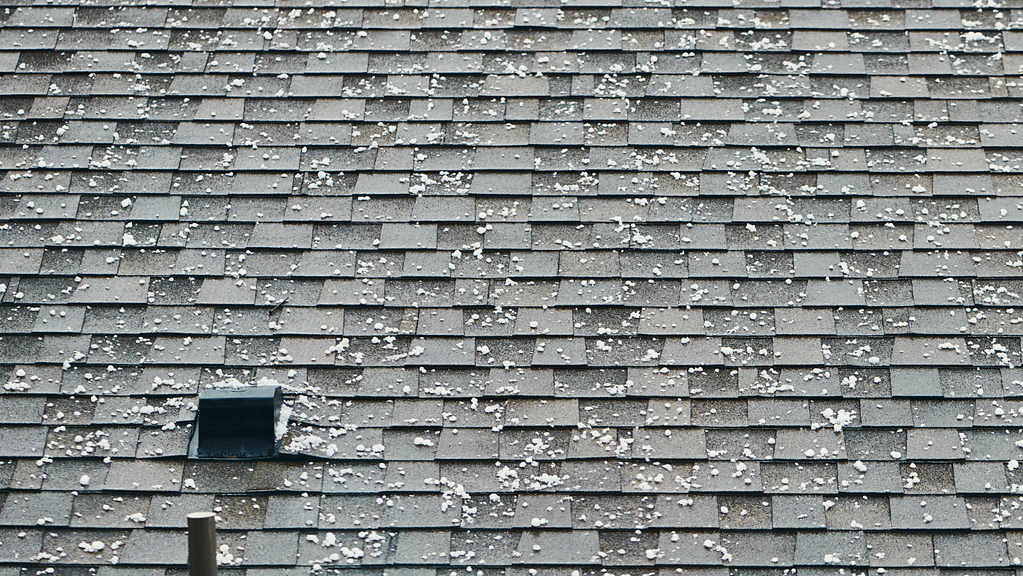
Central Ohio sits squarely in a hail-prone corridor. Spring and summer storm systems regularly roll through Franklin, Delaware, and the surrounding counties, and hail damage is one of the most common reasons homeowners in our service area file insurance claims. Roofs that took a beating from a storm a few years ago are often candidates for a full replacement anyway, which makes the next storm cycle the natural moment to upgrade materials rather than simply replacing like-for-like.
A Class 4 shingle won’t make your roof invincible, but it dramatically reduces the odds that a hailstorm leaves behind cracked granule coats, bruised mats, or punctures that shorten the lifespan of your roof.
The Advantages, Beyond Just “It’s Tougher”
Longer functional lifespan. Hail damage is cumulative even when it isn’t dramatic enough to require an immediate claim. Small bruises and granule loss from repeated minor hail events add up over a roof’s life, accelerating wear and shortening the years before replacement is needed. A Class 4 shingle resists this slow erosion far better than standard shingles.
Potential insurance premium discounts. Many insurance carriers in Ohio offer discounts on homeowners’ premiums for roofs with Class 4 impact-resistant shingles, since insurers have a direct financial interest in reducing hail-related claims. The discount amount varies by carrier, so it’s worth a call to your agent before or after installation to confirm eligibility and get the discount applied.
Stronger position during insurance claims. When we handle insurance claims for clients, we frequently see adjusters scrutinize hail damage claims closely, since hail is subjective in a way that wind damage often isn’t. A Class 4 shingle that does sustain damage tends to show clearer, more documentable impact marks, which can make the claims and matching process more straightforward.
Warranty advantages. Most major manufacturers extend enhanced or longer warranty terms on their Class 4 product lines, reflecting the manufacturer’s own confidence in the material’s performance.
Better resale positioning. Buyers and inspectors increasingly recognize impact-resistant roofing as a marker of a well-maintained, future-proofed home. It’s a detail that can come up favorably during a home inspection or appraisal.
What It Costs
Class 4 shingles typically run somewhat higher than standard architectural shingles upfront, the exact difference depends on the manufacturer and product line you choose. For most homeowners, the combination of insurance premium savings, reduced likelihood of storm-related claims, and a longer effective lifespan makes the math work out favorably over the life of the roof. We’re happy to walk through specific product options and pricing during an estimate.
A Note on Insurance Claims and Upgrades
If you’re replacing your roof because of storm damage and your insurance is covering part of the cost, you can typically still choose to upgrade to Class 4 shingles. Most policies will cover the equivalent cost of a standard replacement, with the homeowner responsible for any difference to upgrade materials. We walk clients through exactly how this works on a claim-by-claim basis, since every policy and adjuster relationship is a little different.
Is It Right for Your Home?
If your roof is in a vulnerable spot, faces an open exposure, or you’ve already filed one or two hail-related claims in recent years, a Class 4 upgrade is one of the more straightforward ways to reduce future risk and headaches. It’s also worth considering any time you’re already replacing a roof due to age or storm damage, since the incremental cost is far lower than retrofitting later.
If you’re weighing your options for an upcoming roof replacement in the Columbus area, we’re happy to walk you through which Class 4 products we install, how they compare on cost and warranty, and whether your specific insurance carrier offers a premium discount for the upgrade.