If you’re weighing siding options for a new build or a renovation, you’ve probably come across fiber cement — and for good reason. In the past two decades, it has gone from a niche product to one of the most popular siding choices in North America. But is the hype warranted? Absolutely. Here’s a deep dive into why fiber cement siding consistently earns its place on the short list of smart homeowners.
What Is Fiber Cement Siding, Exactly?
Fiber cement is a composite material made from Portland cement, sand, and cellulose wood fibers. The result is a dense, rigid panel or plank that mimics the look of wood, stucco, or even brick — without the drawbacks of any of those materials. Brands like James Hardie have made it a household name, but the category includes many manufacturers offering a range of styles and price points.
1. Durability That Outlasts the Competition
This is where fiber cement earns its reputation. Unlike wood siding, fiber cement does not rot, warp, or swell when exposed to moisture. Unlike vinyl, it won’t crack in extreme cold or buckle in intense summer heat. It holds up remarkably well against:
- Hail and impact damage — its density absorbs punishment that would dent or crack vinyl
- Wind — most products are rated to withstand winds well over 100 mph
- Insects and pests — termites and woodpeckers simply have no interest in cement
James Hardie backs their products with 30- to 50-year warranty. That’s not a marketing gimmick — it reflects genuine material longevity.
2. Fire Resistance
Fiber cement is noncombustible. It won’t ignite, and it won’t contribute to the spread of a fire the way wood or vinyl will. For homeowners in fire-prone regions, this isn’t just a nice-to-have — it can be the difference between a home that survives a wildfire and one that doesn’t. Many insurance companies recognize this and offer lower premiums for homes with fiber cement siding. Over time, those savings can offset a meaningful portion of the installation cost.
3. The Look of Wood Without the Maintenance Headaches
One of the most compelling selling points of fiber cement is its aesthetics. It can be manufactured to convincingly replicate the grain and texture of painted wood lap siding, cedar shingles, or even masonry. From the street, it’s genuinely difficult to distinguish from the real thing.
The difference shows up at maintenance time — or rather, the lack of it. Wood siding requires repainting every five to seven years and vigilant inspection for rot, mold, and insect damage. Fiber cement, when properly installed and painted with quality exterior paint, holds its finish far longer. Many homeowners find they can go 10 to 15 years between repaints, and the prep work involved is substantially less.
4. Low Ongoing Maintenance
Beyond painting, fiber cement is remarkably low-effort to maintain:
- It doesn’t need to be caulked as frequently as wood
- It won’t swell and cause nails to pop
- It resists mold and mildew growth
- Cleaning requires nothing more than an occasional rinse with a garden hose
For busy homeowners — or anyone who simply doesn’t want to spend weekends on exterior upkeep — that’s a significant quality-of-life benefit.
5. Excellent Return on Investment
Fiber cement siding consistently ranks among the top home improvement projects for resale value. Remodeling Magazine’s annual Cost vs. Value Report has repeatedly shown fiber cement siding replacement recouping 70–80% of its cost at resale — a figure that competes favorably with almost any other exterior upgrade.
Beyond the numbers, curb appeal matters. A home with clean, attractive siding photographs better, shows better, and commands more interest from buyers. Fiber cement’s ability to hold paint and maintain its appearance over time means your home looks just as good in year 15 as it did when the project was done.
6. Dimensional Stability in Extreme Climates
Wood expands and contracts significantly with temperature and humidity swings. Over time, this leads to gaps, warping, and paint failure. Fiber cement is far more dimensionally stable — it moves very little in response to temperature change, which means better-looking seams, longer-lasting paint, and fewer callbacks for installers.
This makes it particularly well-suited to climates with harsh winters, humid summers, or both — which describes most of the continental United States.
7. Versatility of Style
Whether your home is a traditional craftsman bungalow, a modern farmhouse, or a contemporary build with clean lines, fiber cement manufacturers offer products to match. Options include:
- Lap siding (horizontal planks) — the most classic look, available in varying widths
- Shingle and shake panels — ideal for cottages and coastal styles
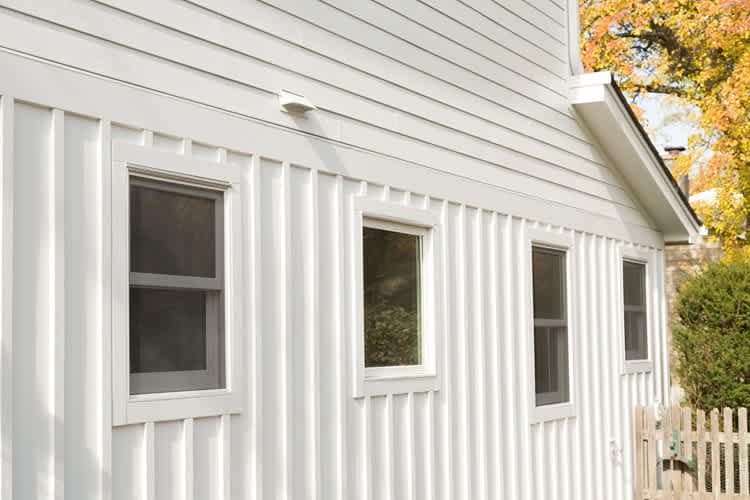
- Vertical board and batten — popular for farmhouse and transitional aesthetics
- Smooth and stucco finishes — suited to modern and Mediterranean designs
It can be painted any color and repainted down the road when tastes change, giving homeowners flexibility that materials like brick simply don’t offer.
What to Keep in Mind
Fiber cement isn’t without its considerations. It’s heavier than vinyl, which means installation requires more labor and typically costs more upfront. Cutting it produces silica dust, so professional installers use appropriate safety equipment and specialized tools. And because it must be painted (most products are primed but not finish-coated from the factory), you’ll need to budget for that step.
That said, for most homeowners comparing total cost of ownership over 20 or 30 years — factoring in durability, maintenance savings, and resale value — fiber cement comes out ahead of almost every alternative.
The Bottom Line
Fiber cement siding is not the cheapest option at the point of purchase, but it’s one of the most cost-effective choices you can make when you think long-term. It offers the aesthetic appeal of wood, the resilience of masonry, and a maintenance profile that’s closer to brick than to anything organic. If you’re investing in your home’s exterior, few materials give you as much in return.